You just found out your property has a buried oil tank. Maybe it turned up during a home inspection, a neighbor mentioned it, or you spotted an old fill pipe in the yard. Either way, an underground oil tank is not something to ignore. In Southeastern Pennsylvania, where many older homes heated with oil before switching to gas, forgotten tanks still sit buried in yards across Bucks County and Montgomery County. Left alone, they can leak, contaminate soil, block a home sale, and create serious liability. After 25+ years handling tank removal and demolition since 2000, Robinson Landscape helps homeowners deal with buried tanks the right way.
This article offers general guidance, not legal or environmental advice. PA DEP rules and local requirements vary. Consult a qualified professional about your property.
What You’ll Learn
- Why a Buried Oil Tank Is a Real Problem
- What Can Go Wrong If You Leave It
- How to Know If You Have a Tank and What to Check
- The Removal Process and What It Costs in PA
- Why Southeastern PA Homeowners Choose Robinson Landscape
- Frequently Asked Questions
- Next Steps
Why a Buried Oil Tank Is a Real Problem
A buried oil tank, also called an underground storage tank, is a steel tank installed underground to hold heating oil. Most residential tanks hold 275 to 1,000 gallons. The trouble is simple: steel tanks rust, and a corroded tank can leak oil into the surrounding soil and groundwater.
Here’s why Pennsylvania homeowners need to take a buried tank seriously:
- Leaks are common in old tanks. Many buried tanks in Southeastern PA are decades old, well past their lifespan, and corrosion is the main cause of failure.
- Contamination is expensive. A leaking tank can contaminate soil and groundwater, with cleanup costs climbing far beyond the cost of removing the tank.
- It can block a home sale. Many lenders won’t approve a mortgage on a home with a known underground oil tank because of the remediation risk, and inspectors flag these fast.
- Liability sits with the owner. If a buried tank leaks, the property owner is generally responsible for cleanup, whether or not they knew the tank was there.
An unused tank underground is not neutral. It is a slow-moving risk that gets more expensive the longer it waits.
What Can Go Wrong If You Leave It
Corrosion Leads to Leaks
Steel tanks buried in soil corrode from the outside in. A tank installed in the 1960s, 70s, or 80s has likely been in the ground 40 years or more, far beyond its service life. Once the steel fails, heating oil seeps into the soil and can reach groundwater.
Contamination Triggers State Requirements
Pennsylvania’s underground storage tanks fall under the Department of Environmental Protection and the Storage Tank and Spill Prevention Act. Many small residential heating oil tanks are exempt from registration, but that exemption disappears the moment a leak is discovered. Contamination then must be reported to PA DEP and cleaned up to state standards.
Cleanup Costs and Home Sales
Removing a clean, non-leaking tank is straightforward. But if soil testing finds contamination above Pennsylvania’s cleanup standards, remediation can add thousands of dollars, and a large plume can climb much higher. You don’t know which situation you have until the tank comes out and the soil is tested, so removing it sooner limits how long any leak can spread. A buried tank also follows you to the closing table, where buyers worry about liability and lenders hesitate, which is why many Southeastern Pennsylvania sellers remove tanks before listing.
How to Know If You Have a Tank and What to Check
Not sure whether your property has a buried oil tank? Here’s how to find out:
- Look for a fill pipe or vent pipe. A capped pipe sticking out of the ground or the side of your house, often near the foundation, is a common sign of a buried tank.
- Check the age and heating history. Homes built before the 1980s that once heated with oil are prime candidates, especially if they later switched to gas and left the old tank in place.
- Review property and permit records. Past removal permits, gas conversion permits, or environmental work may show up in township or county records.
- Watch for oil smells or dead patches. A persistent oil odor or struggling vegetation can signal a leak.
- Ask for a tank sweep. A professional can run a magnetometer survey to detect buried metal tanks when records are unclear.
When to call a professional: If you confirm or suspect a tank, or find any sign of a leak, do not dig it up yourself. Improper handling can trigger PA DEP notification requirements and increase your liability. This is work for an experienced crew.
The Removal Process and What It Costs in PA
How Professional Removal Works
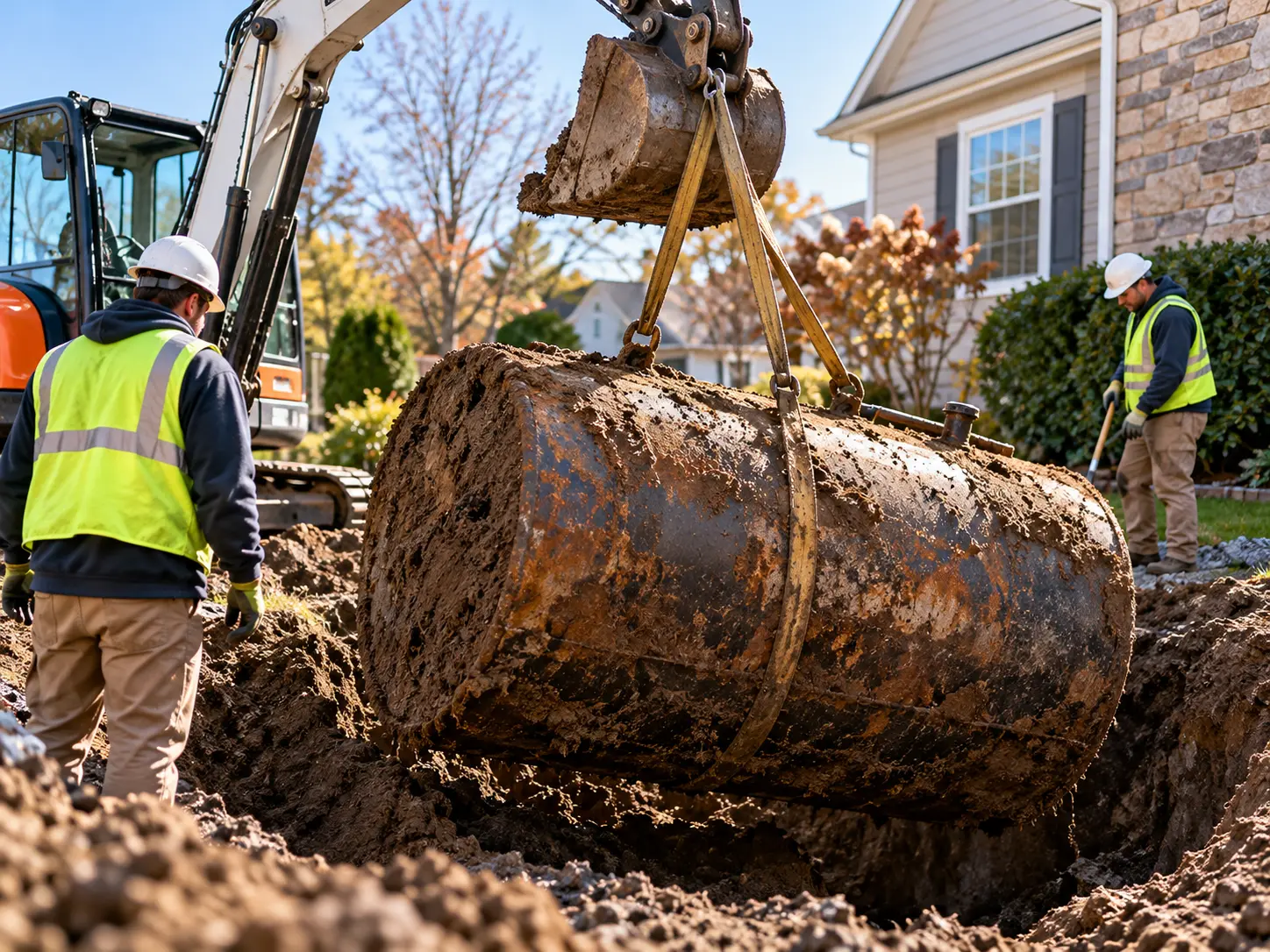
A proper underground oil tank removal in Pennsylvania follows a clear sequence. It starts with a PA One Call (811) notification, required by law at least three business days before excavation. From there, the crew pumps out any remaining oil, degasses the tank, excavates and removes it, inspects for leaks, and takes soil samples from the tank bed and piping. A clean residential removal usually wraps up in a single day. This is not a DIY project. It involves heavy equipment, flammable residue, environmental testing, and regulatory steps that carry real liability if done wrong.
What It Costs
For a standard buried residential tank in Pennsylvania, removal typically runs $1,200 to $3,000, depending on size, depth, access, and how much oil remains. Soil testing adds roughly $200 to $500. If the soil is clean, that’s the end of it. If contamination is found, remediation is a separate cost based on the extent of the problem. Robinson Landscape provides a clear, upfront estimate before any work begins.
Help With Cleanup Costs
Pennsylvania’s Underground Storage Tank Indemnification Fund can reimburse eligible homeowners for part of leak cleanup costs after a deductible. It does not cover routine removal, but it can ease the burden if a cleanup is needed.
Why Southeastern PA Homeowners Choose Robinson Landscape
Robinson Landscape has handled oil tank removal and demolition throughout Southeastern Pennsylvania since 2000, now in our 26th year. The same local expertise and heavy-equipment experience that make us trusted for pool removal apply directly to buried tank work, including Bucks County and Montgomery County soil conditions and township requirements. We’re triple-licensed (PA #pa071368, NJ #13vh08112100, Philadelphia #46245) with OSHA certification (#36-900440038) and a BuildZoom score of 113, top 3% of 125,106 Pennsylvania contractors. Tim Robinson personally oversees every project.
Frequently Asked Questions
How do I know if I have a buried oil tank? Look for a capped fill or vent pipe near your foundation, check whether an older home once heated with oil, and review property records for past removal permits. If records are unclear, a professional tank sweep with a magnetometer can detect buried metal tanks.
Do I need a permit to remove an oil tank in Pennsylvania? Most townships require a permit, and PA One Call (811) notification is mandatory before excavation. Requirements vary by municipality. Robinson Landscape handles permits and notifications as part of the job.
How much does underground oil tank removal cost in Pennsylvania? A standard buried residential tank typically costs around $1,200 to $3,000 to remove, depending on size, depth, and access. Soil testing adds roughly $200 to $500. Contamination cleanup, if needed, is a separate cost.
What happens if my tank has leaked? If soil testing finds contamination above Pennsylvania’s cleanup standards, the leak must be reported to PA DEP and remediated. Cleanup cost depends on how far the contamination spread, so removing the tank promptly limits the damage.
Can I just leave the tank in the ground? Leaving a tank buried doesn’t remove the risk, it defers it. The tank keeps corroding, a future leak stays your liability, and it can block a home sale. Removal is the cleaner long-term solution.
Will my homeowner’s insurance cover tank removal? Standard homeowner’s policies typically do not cover routine oil tank removal. Pennsylvania’s Underground Storage Tank Indemnification Fund may help with eligible leak cleanup costs after a deductible.
How long does oil tank removal take? A clean residential underground tank removal usually takes a single day, including excavation, removal, inspection, and soil sampling. Larger or contaminated sites can take longer.
Should I remove the tank before selling my home? Often, yes. A known buried oil tank can scare off buyers and lenders. Removing it before listing, with documentation, clears a major hurdle and makes the property easier to sell.
Next Steps
Key takeaways:
- Buried oil tanks corrode over time and can leak into soil and groundwater
- A leak is the owner’s liability and can trigger PA DEP cleanup requirements
- Standard residential removal in PA runs roughly $1,200 to $3,000, plus soil testing
- Removing the tank early limits risk and clears a major hurdle before any home sale
If you have or suspect a buried oil tank, don’t wait for it to become a bigger problem. Contact Robinson Landscape for a free, no-pressure assessment. Call (215) 292-6572 or email tim@robinsonlandscape.com to speak with Tim Robinson. Serving Bucks County, Montgomery County, Philadelphia, and Central/South New Jersey.
About the Author
Tim Robinson is the Owner and Founder of Robinson Landscape, LLC, with 25+ years of demolition, excavation, and tank removal expertise throughout Southeastern Pennsylvania and New Jersey. Tim personally oversees every project and has helped many homeowners safely remove buried oil tanks and clear the path to a home sale. Robinson Landscape has been in business since 2000 with a BuildZoom score in the top 3% of Pennsylvania contractors.

Tim Robinson is the owner of Robinson Landscape LLC, proudly serving Bucks and Montgomery Counties for over 24 years. Known for his strong work ethic, clear communication, and reliability, Tim brings passion and professionalism to every job. When he’s not working, he enjoys time with his wife, two kids, and their family dog.