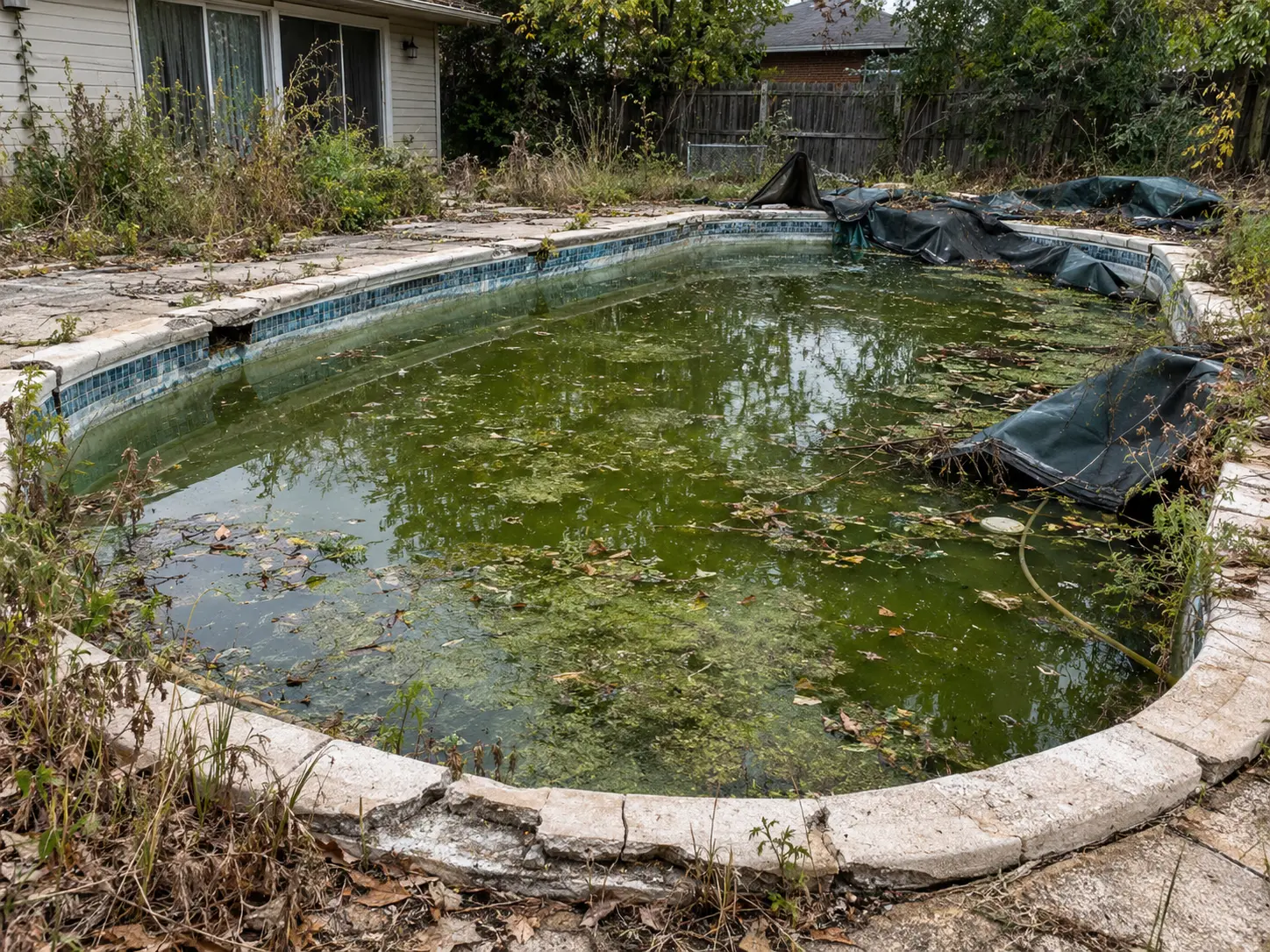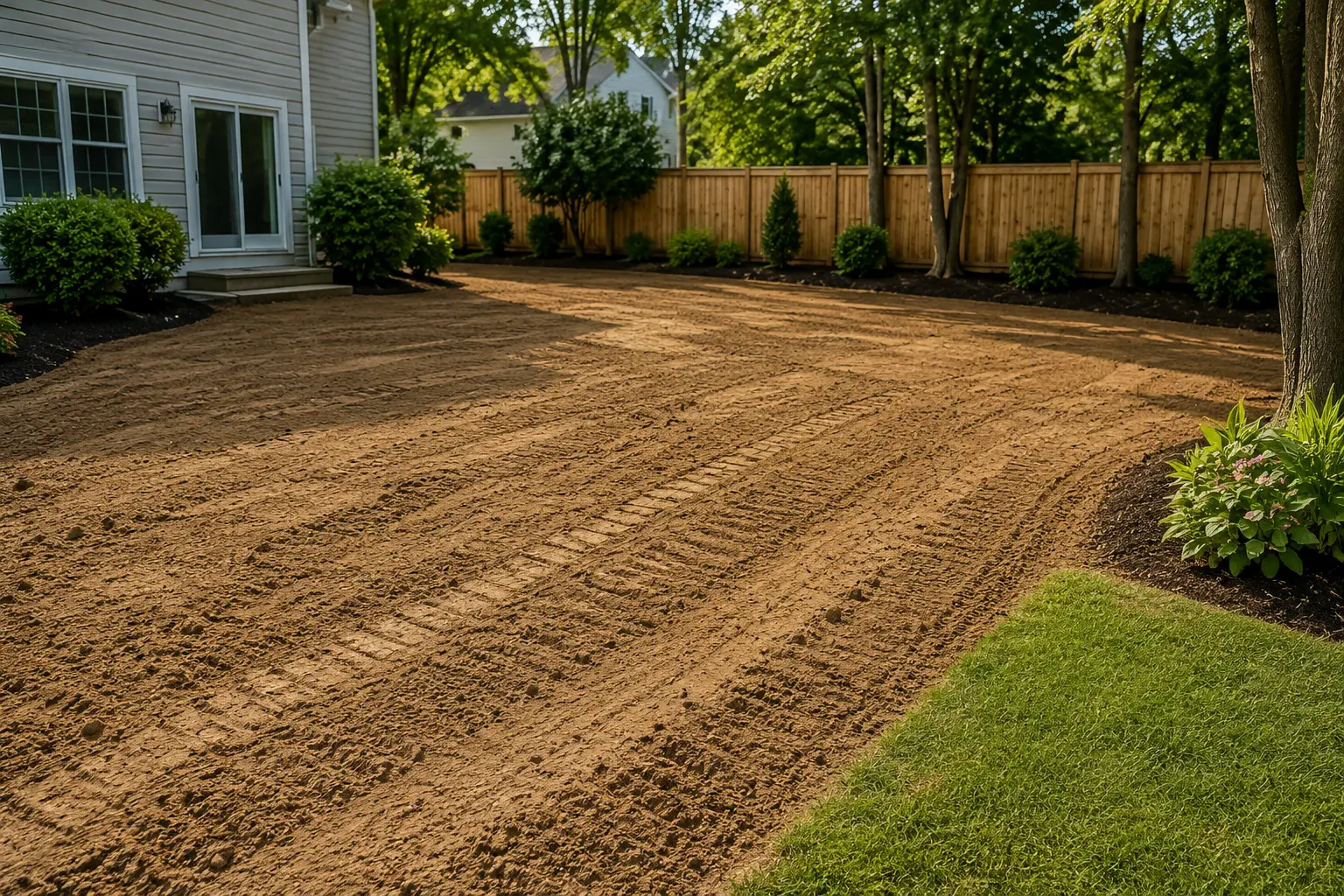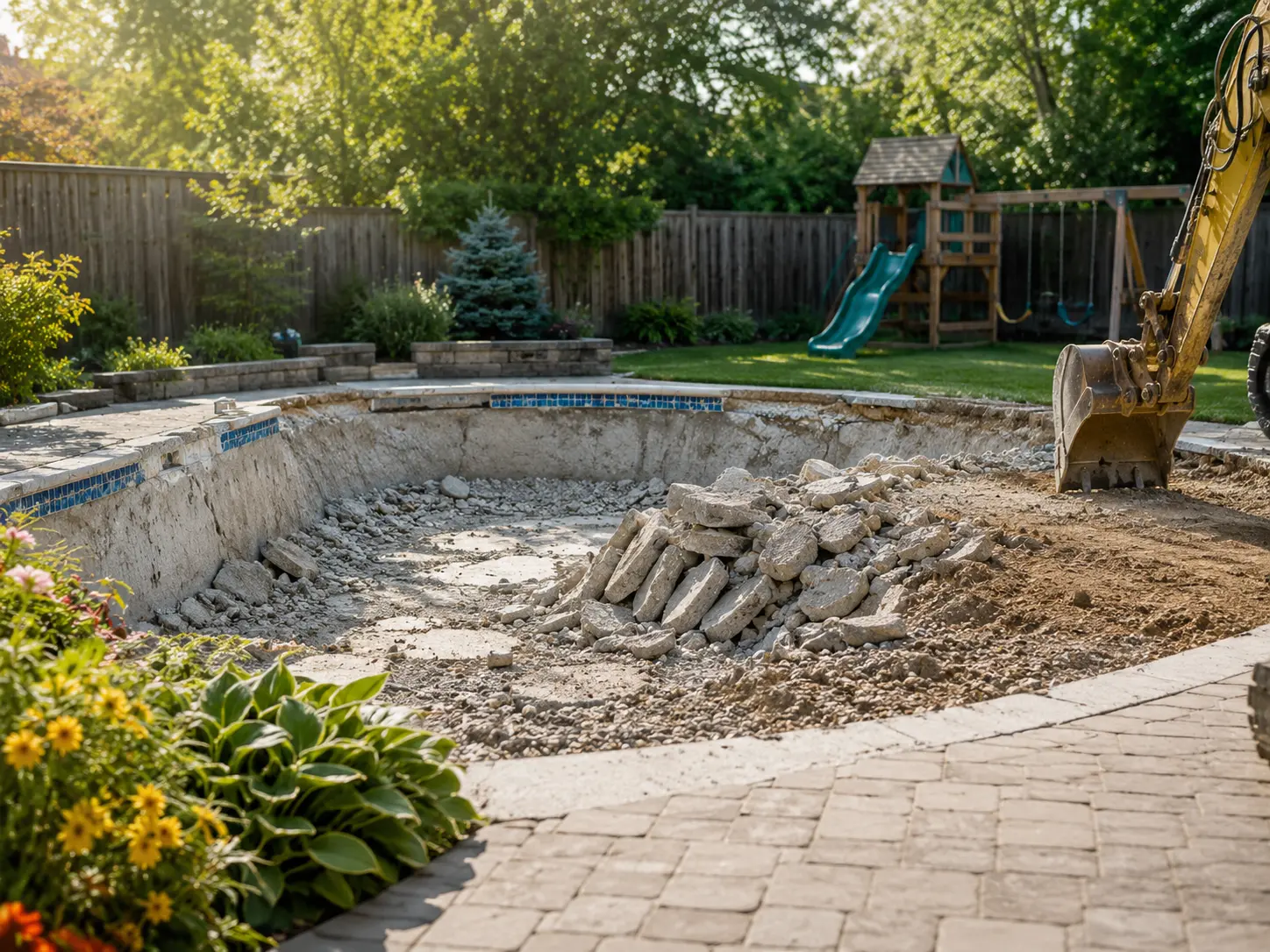
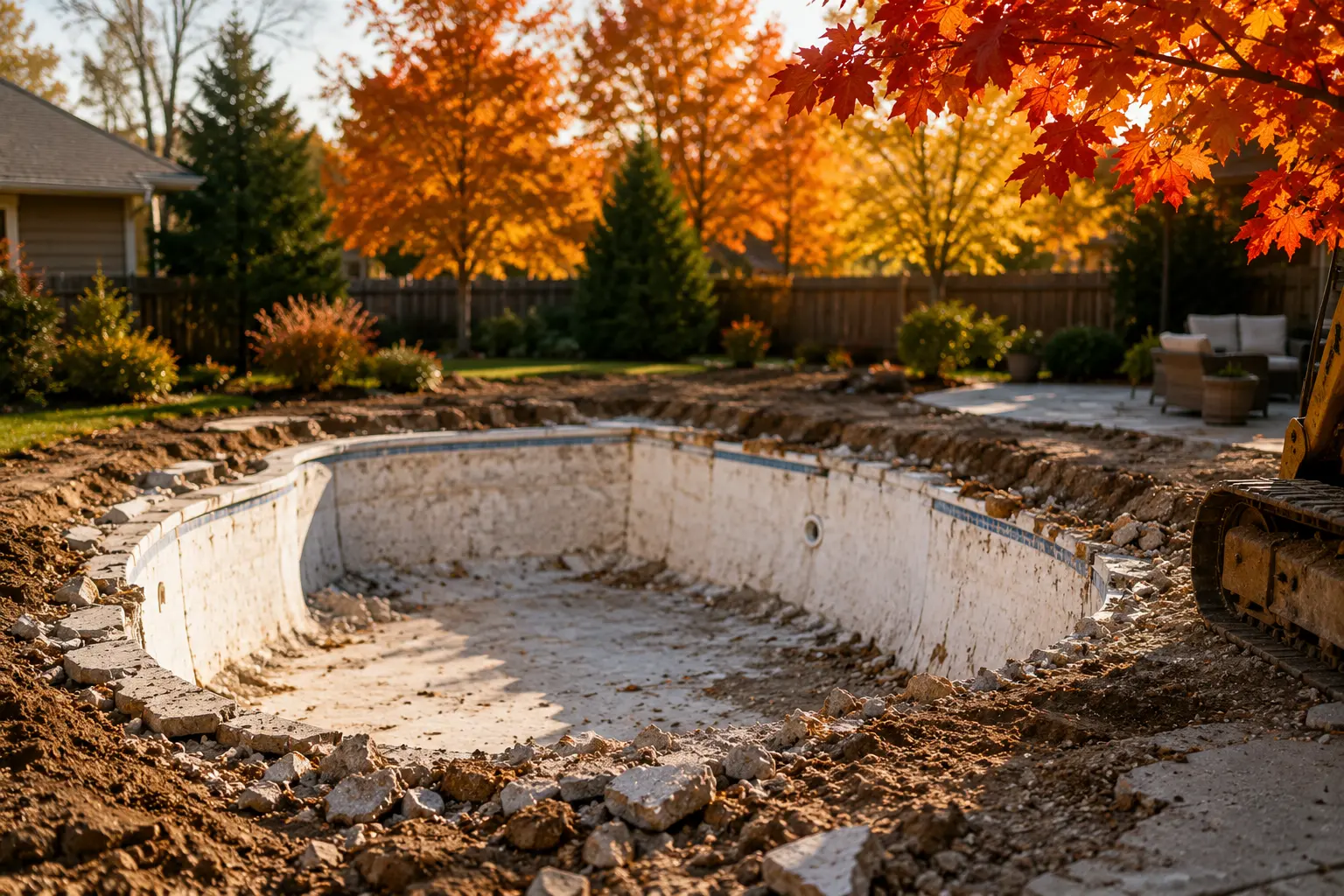
Summer’s crowds are gone, the swimming season is over, and that pool you barely touched is now just a chore waiting to be winterized — again. Here’s what most Southeastern Pennsylvania homeowners never realize: fall is quietly the single best time of year to remove a pool. Not spring, not summer — fall. The combination of ideal grass-growing weather, relaxed contractor schedules, and perfect timing for a spring-ready yard makes September through November a window savvy Bucks County and Montgomery County homeowners have quietly used for years. After 25+ years removing pools across every season since 2000, Robinson Landscape can explain exactly why fall deserves its reputation as the best-kept secret in pool removal.
What You’ll Learn
- Why Fall Outperforms Every Other Season
- The Science and Logistics Behind Fall’s Advantages
- How to Know If Fall Removal Fits Your Situation
- Making the Most of Your Fall Pool Removal
- Why Southeastern PA Homeowners Choose Robinson Landscape
- Frequently Asked Questions
- Next Steps
Why Fall Outperforms Every Other Season
Every season has trade-offs. Winter brings firm ground but delays grass until spring. Summer means immediate use of the space but challenging seeding conditions. Spring offers good growing weather but wet, muddy ground and peak-season demand. Fall is the season where the advantages line up without the drawbacks.
For Bucks County and Montgomery County homeowners, fall pool removal delivers a rare combination:
- The best seeding window of the entire year. Per Penn State Extension, late summer to early fall is optimal for establishing a new lawn — new grass gets two cool growing seasons before its first summer heat stress.
- Firmer, drier ground than spring. Fall soil is typically drier than spring’s saturated conditions, giving equipment better footing and reducing lawn damage.
- Off-peak contractor availability. As the busy summer season winds down, scheduling becomes more flexible and attention more focused.
- You stop the winterization cycle. Remove the pool in fall and you never pay another closing fee, buy another cover, or worry about freeze damage again.
- A spring-ready yard. By the time the growing season returns, your restored lawn is established and your reclaimed space is ready to enjoy.
The Science and Logistics Behind Fall’s Advantages
Fall Is the Undisputed Best Time to Seed in Pennsylvania
This is fall’s biggest advantage, backed by turf science. Pennsylvania lawns are cool-season grasses — Kentucky bluegrass, perennial ryegrass, fine fescue — that thrive in mild temperatures. Penn State Extension confirms late summer to early fall is best for establishing these grasses: seedlings face reduced weed competition and get two cool growing seasons before their first summer heat stress.
The ideal seeding window in Southeastern PA runs late August through mid-October, with September the sweet spot. Soil is still warm (fast germination) while air cools and fall rains arrive. A pool removed in early-to-mid fall hits this window perfectly — the grass we seed establishes quickly and returns lush the following spring.
Drier Ground Means Cleaner, Faster Work
Spring is romanticized as planting season, but for excavation it has a drawback: wet ground. Southeastern Pennsylvania’s clay-heavy soil holds spring moisture, turning to mud that creates equipment ruts and lawn damage. Fall soil is typically drier. Firmer ground means our excavators and trucks operate cleanly, minimizing damage to your surrounding yard.
Off-Peak Scheduling Works in Your Favor
Pool removal demand peaks in late spring and summer. By fall, that rush has passed — meaning more flexible scheduling and focused attention. Tim Robinson personally oversees every removal, and fall’s lighter schedule allows even closer involvement.
You Break the Winterization Cycle Permanently
Every fall, pool owners face the ritual: draining lines, adding chemicals, installing covers, and paying $150–$250 for professional closing. Remove your pool in fall instead, and you skip this entirely — forever.
How to Know If Fall Removal Fits Your Situation
Fall pool removal is an especially strong fit if any of these describe you:
- You barely used the pool this year. The swimming season just ended. If the pool sat mostly unused again, fall is the natural moment to act rather than winterizing something you’ve decided to remove.
- You’re dreading another closing. If one more winterization — draining, covering, paying the fee — feels like a waste, that’s your signal.
- You want an established lawn by spring. Fall removal positions your restored yard for the ideal seeding window, delivering green grass when spring arrives.
- You’re planning spring landscaping. Removing in fall gives your site the winter to settle, so you’re ready to build patios, gardens, or play areas in spring.
- You’d rather avoid the spring rush. A fall project beats the crowd of homeowners who wait until warm weather and face longer waits.
- Your equipment or liner is aging. If you’re facing repair decisions, removing in fall avoids sinking money into a pool you’ll barely use again.
Making the Most of Your Fall Pool Removal
Time It for the Seeding Window
The ideal scenario is a September or early October removal, hitting the peak grass-establishment window. Robinson Landscape grades, applies topsoil, and seeds at completion, then recommends light watering and 30 days without foot traffic. You’ll see establishment before winter and a full lawn by spring.
Even Late Fall Works
If your removal happens in November — past the ideal seeding window — Robinson Landscape still grades the site properly and applies seed with protective straw cover. The seed lies dormant through winter and germinates in spring. The alternative — waiting through winter with the pool still in your yard — means another closing cycle and months of continued liability.
Plan Your Spring Transformation
One underrated benefit: you get all winter to plan. With the pool gone and the site settling, you can design what the space becomes — a paver patio, fire pit, garden beds, or open lawn — and break ground first thing in spring.
What Robinson Landscape Handles
Robinson Landscape manages everything: permits, utility marking, demolition, certified clean fill, systematic compaction, precision grading, topsoil, and seeding. Most fall pool removals complete in 2–3 days.
Why Southeastern PA Homeowners Choose Robinson Landscape
Robinson Landscape has performed fall pool removal throughout Southeastern Pennsylvania since 2000 — now in our 26th year. We understand how Bucks County and Montgomery County’s soil, climate, and seeding windows work together, so we time and execute every project for the best long-term result. We’re triple-licensed (PA #pa071368, NJ #13vh08112100, Philadelphia #46245) with OSHA certification (#36-900440038) and a BuildZoom score of 113 — top 3% of 125,106 Pennsylvania contractors. Tim Robinson personally oversees every project.
Frequently Asked Questions
Why is fall considered the best time for pool removal in Pennsylvania? Fall combines the year’s best grass-seeding window, drier ground for cleaner equipment operation, and off-peak scheduling. Penn State Extension confirms late summer through early fall is optimal for establishing Pennsylvania’s cool-season grasses, meaning a lush lawn by spring.
When exactly is the ideal fall removal window? September through early October is the sweet spot for seeding. Removals later in fall still work well — Robinson Landscape seeds and applies straw cover so the site is ready for spring germination.
Will my grass grow if the pool is removed in fall? Yes — better than almost any other time. Fall seeding gives grass two cool growing seasons before summer heat stress. An early fall removal typically produces visible establishment before winter and a full lawn by spring.
Is fall pool removal cheaper than summer? Robinson Landscape maintains consistent pricing year-round with no seasonal surcharges. That said, fall’s off-peak timing often means more flexible scheduling. Cost depends on pool size, type, access, and site conditions.
Can you remove a pool in late fall or once it gets cold? Yes. Robinson Landscape performs pool removal year-round. Late fall removals are graded and seeded with straw cover so the site is protected through winter and ready to germinate in spring.
How long does fall pool removal take? Most projects complete in 2–3 days regardless of season, including permits, demolition, fill, compaction, grading, and seeding.
Should I just winterize my pool one more time instead? If you’ve decided to remove the pool, another winterization is money spent on something you’re eliminating. Fall removal skips the closing fee, the cover, and the freeze-damage risk permanently.
How much does fall pool removal cost in Bucks County? Inground pool removal costs $5,000–$25,000 depending on size, type, access, and complexity. Above-ground removal ranges $3,000–$6,000. Robinson Landscape provides free, detailed estimates.
Next Steps
Key takeaways:
- Fall is Pennsylvania’s best pool removal season — ideal seeding, drier ground, off-peak scheduling
- September through early October hits the optimal grass-establishment window
- Fall removal breaks the winterization cycle and delivers a spring-ready yard
- Robinson Landscape completes most removals in 2–3 days with full restoration
Don’t winterize a pool you’ve decided to remove. Take advantage of Pennsylvania’s best-kept pool removal secret. Call Robinson Landscape at (215) 292-6572 or email tim@robinsonlandscape.com for a free estimate. Serving Bucks County, Montgomery County, Philadelphia, and Central/South New Jersey.
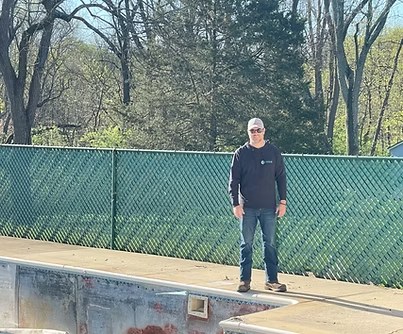
Tim Robinson is the owner of Robinson Landscape LLC, proudly serving Bucks and Montgomery Counties for over 24 years. Known for his strong work ethic, clear communication, and reliability, Tim brings passion and professionalism to every job. When he’s not working, he enjoys time with his wife, two kids, and their family dog.