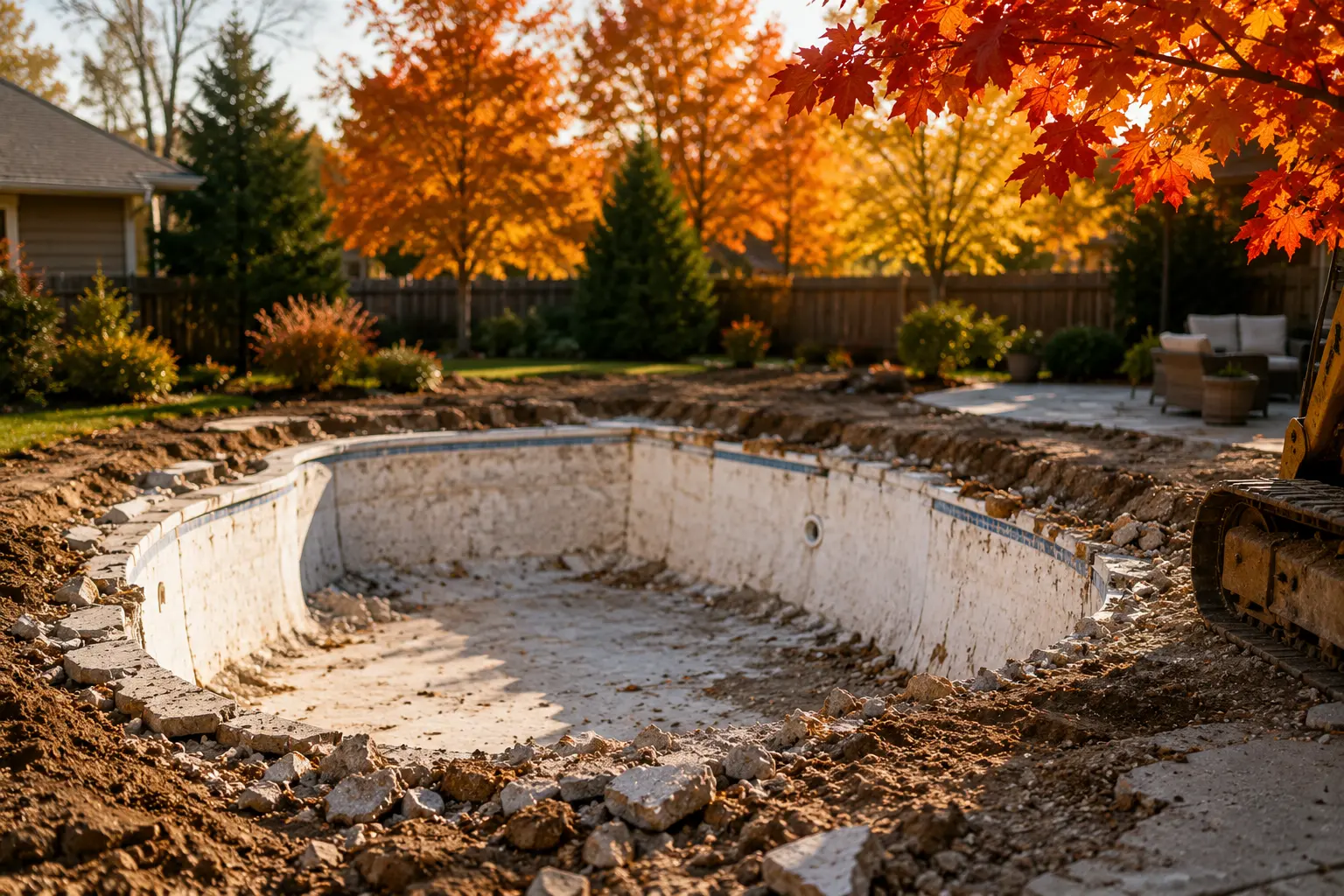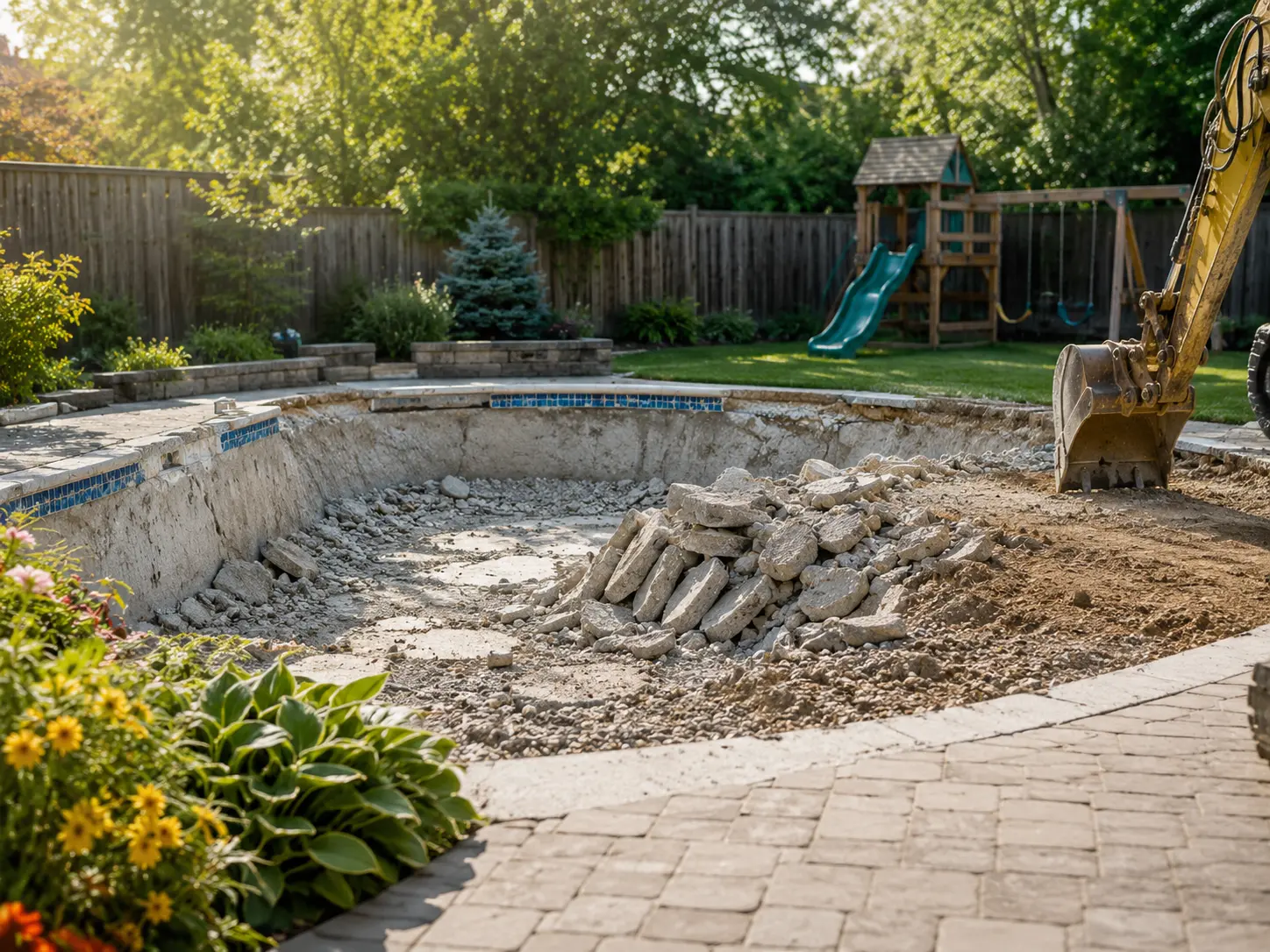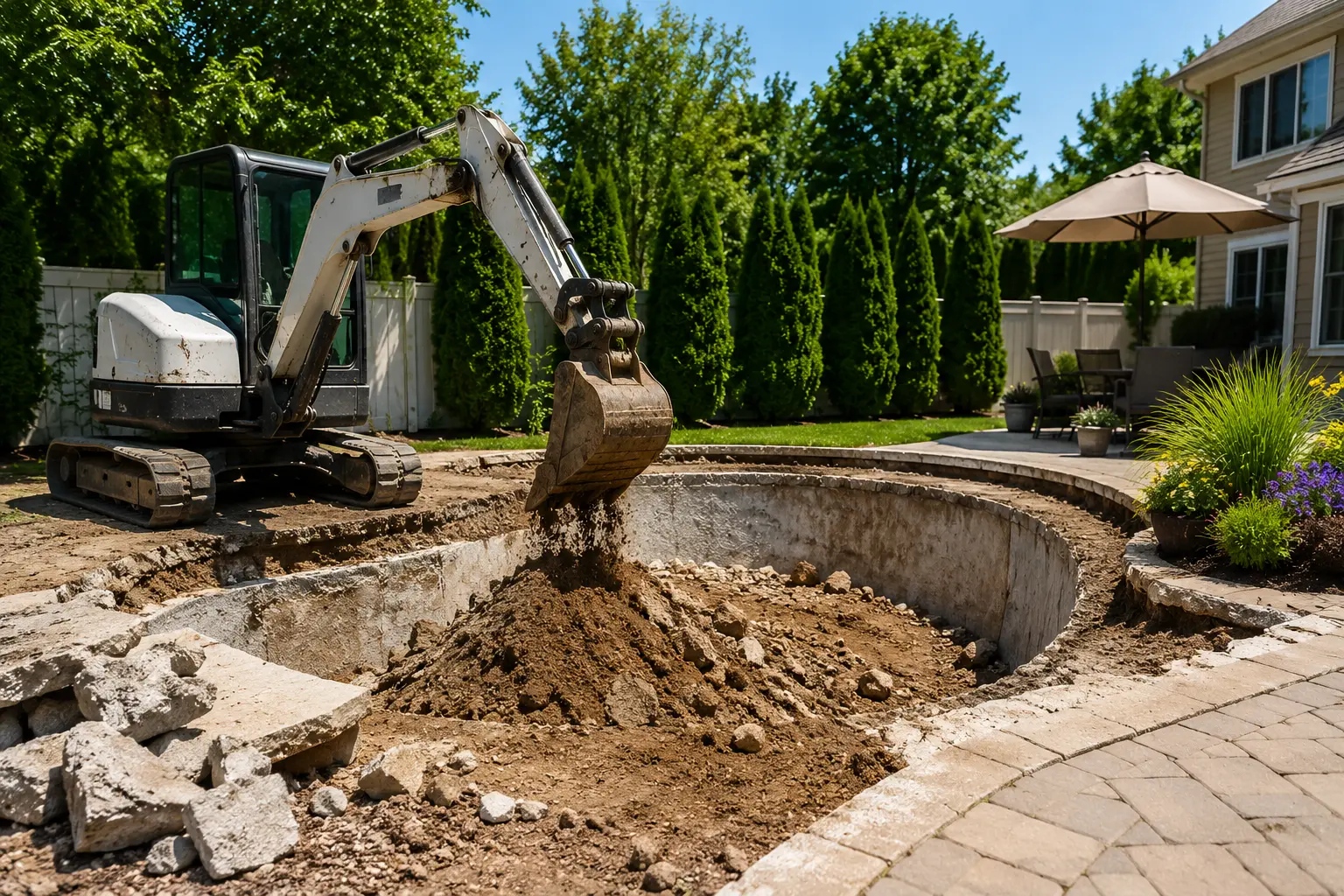

Settling a loved one’s estate is hard enough without a green, neglected pool sitting in the backyard, adding cost, liability, and one more decision to a long list. Whether you inherited a family home, a second property, or a house held in a trust, that pool is now your responsibility, and it doesn’t wait for the estate to close. In Southeastern Pennsylvania, where pools were a common backyard feature for decades, families across Bucks County and Montgomery County face this situation regularly. After 25+ years helping families handle pool removal during estate transitions since 2000, Robinson Landscape understands both the practical steps and the sensitivity these situations require.
This article offers general guidance, not legal, tax, or financial advice. Consult an estate attorney or tax professional about your specific situation.
What You’ll Learn
- Why an Inherited Pool Becomes an Immediate Concern
- The Estate-Specific Complications Most Families Miss
- Your Decision Framework: Keep, Sell As-Is, or Remove
- How Pool Removal Fits Into Settling the Estate
- Why Southeastern PA Families Choose Robinson Landscape
- Frequently Asked Questions
- Next Steps
Why an Inherited Pool Becomes an Immediate Concern
Unlike a home you chose to buy, an inherited property with a pool often arrives unexpectedly, sometimes after the home sat vacant and the pool went unmaintained. That combination creates concerns that need early attention:
- Liability transfers with the property. Under Pennsylvania’s attractive nuisance doctrine, whoever holds legal responsibility, whether an executor, trustee, or heir, can be liable for injuries at the pool, including to trespassing children.
- Vacant-home insurance gets complicated. Insurers treat vacant properties differently, and an unmaintained pool adds risk. Contact the insurer promptly to keep coverage in force.
- A neglected pool worsens fast. A pool that sat through even one Pennsylvania winter can develop algae, mosquito breeding, and structural issues that grow more expensive by the season.
- It affects the estate’s value and sale. Whether heirs plan to sell or keep the property, the pool influences marketability, insurance, and the final decision.
The good news: you have clear options, and none require rushing before you understand the estate’s situation.
The Estate-Specific Complications Most Families Miss
Legal Authority Comes First
Before spending a dollar on the pool, confirm who has authority to make decisions about the property. Depending on how the home was titled and whether it was held in a trust, that may rest with an executor, administrator, trustee, or surviving co-owner. Families sometimes hire contractors before this is settled, which creates complications. Robinson Landscape can provide a free assessment while you confirm the estate’s legal standing, so you’re ready to act once authority is clear.
Pennsylvania’s Inheritance Tax and Multiple Heirs
Pennsylvania is one of the few states with its own inheritance tax, with rates that vary based on the heir’s relationship to the deceased. Because the estate’s value factors into what’s owed, property condition and planned work are worth discussing early with your estate attorney or tax professional, since they can influence timing.
When siblings or several beneficiaries share the property, decisions about the pool can stall. A clear, documented removal estimate often helps families agree, because it replaces vague worry with concrete numbers everyone can evaluate together.
Emotional Weight Is Real
An inherited home often carries memories, and the pool may be part of them. There’s no rush to erase anything. But practically, an unmaintained pool is a growing cost and liability, and most families find that resolving it brings relief. Robinson Landscape approaches these situations with the patience they deserve.
Your Decision Framework: Keep, Sell As-Is, or Remove
Most families settling an estate with an inherited property with a pool land on one of three paths. Here’s how to think through each.
Option 1: Keep the Pool
This makes sense only if an heir plans to live in the home, wants a functional pool, and the pool is restorable. Reality check: a pool neglected during the estate period typically needs $5,000 to $15,000 or more to restore, plus $3,000 to $5,000 per year in maintenance. For most inherited situations, this is the least common choice.
Option 2: Sell the Property As-Is
Some estates sell to cash buyers or investors who accept the pool’s condition. This is fastest but usually means a lower sale price, since buyers discount heavily for a pool they’ll address themselves. In much of Bucks County and Montgomery County, a neglected pool also narrows your buyer pool, since many buyers avoid pool homes entirely.
Option 3: Remove the Pool Before Selling
For most families, this produces the best outcome. Removing the pool eliminates the liability, opens the property to more buyers, and often nets more than selling as-is despite the removal cost. Inground pool removal runs $5,000 to $25,000, above-ground $3,000 to $6,000, a one-time cost that resolves the issue completely.
A simple test: If the pool is neglected, no heir wants it, and the property will be sold, removal is almost always the right call.
How Pool Removal Fits Into Settling the Estate
Timing Around the Estate Process
Pool removal doesn’t have to wait for the entire estate to close. Once the responsible party has legal authority, Robinson Landscape can move forward. Most removals finish in 2 to 3 days, and we can often work within the timeline of a pending sale. We’ve completed removals as quickly as 4 days when a closing deadline required it.
We Handle the Details Families Don’t Have Time For
Settling an estate is a full-time job on top of your actual life. Robinson Landscape manages the entire removal: permits, utility marking, demolition, certified clean fill, compaction, grading, topsoil, and seeding. You get one point of contact and a clear timeline, not another project to manage.
Documentation and Coordination
We provide complete permit approvals, inspection records, and completion certificates, which matter for the estate’s records, any property sale, and adjusting insurance once the liability is gone. We also coordinate regularly with estate attorneys, real estate agents, and family members in different locations, keeping communication clear so everyone stays informed without extra effort on your part.
Why Southeastern PA Families Choose Robinson Landscape
Robinson Landscape has helped Southeastern Pennsylvania families handle pool removal during estate transitions since 2000, now in our 26th year. We understand these situations call for patience, clear communication, and reliable timelines. We’re triple-licensed (PA #pa071368, NJ #13vh08112100, Philadelphia #46245) with OSHA certification (#36-900440038) and a BuildZoom score of 113, top 3% of 125,106 Pennsylvania contractors. Tim Robinson personally oversees every project and provides honest, no-pressure assessments.
Frequently Asked Questions
Who is responsible for an inherited pool during probate? Legal responsibility usually rests with the estate’s executor, administrator, or trustee until the property transfers. That party generally handles insurance and liability too. Confirm authority with your estate attorney before acting.
Should I remove the pool before selling an inherited home? Often, yes. In Southeastern Pennsylvania, removing a neglected pool widens your buyer pool, eliminates liability, and can net more than selling as-is. The one-time cost frequently pays off through a smoother, higher sale.
How much does it cost to remove a pool from an inherited property? Inground pool removal costs $5,000 to $25,000 depending on size, type, condition, and access. Above-ground removal runs $3,000 to $6,000. Neglected pools may fall higher. Robinson Landscape provides free, detailed estimates.
Can pool removal happen before the estate closes? Yes, once the responsible party has legal authority to act on the property. Robinson Landscape can provide an estimate anytime and schedule work once authority is confirmed. Most removals finish in 2 to 3 days.
Does removing the pool affect Pennsylvania inheritance tax? Pennsylvania does have an inheritance tax, and property condition can factor into estate value. How that interacts with removal is a question for your estate attorney or tax professional, worth discussing early since it can influence timing.
What if multiple heirs disagree about the pool? This is common. A clear, written removal estimate often helps families decide together by turning vague concerns into concrete numbers everyone can work from.
The pool has been neglected for years. Can it still be removed? Yes. Robinson Landscape removes pools in every condition, from recently closed to long-abandoned. Our crew handles structural damage, standing water, and overgrown vegetation safely.
Do you provide documentation we can keep for the estate? Yes. Every project includes permit approvals, inspection records, and completion certificates that support the estate’s records, any property sale, and insurance adjustments once the pool is gone.
Next Steps
Key takeaways:
- Confirm who has legal authority over the property before acting on the pool
- An inherited pool’s liability and cost transfer with the property and grow over time
- For most estates, removing a neglected pool before selling produces the best outcome
- Robinson Landscape handles permits, removal, and documentation with patience and clear communication
Handling an estate is a lot to carry. Let us take the pool off your list. Contact Robinson Landscape for a free, no-pressure assessment. Call (215) 292-6572 or email tim@robinsonlandscape.com to speak with Tim Robinson. Serving Bucks County, Montgomery County, Philadelphia, and Central/South New Jersey.
About the Author
Tim Robinson is the Owner and Founder of Robinson Landscape, LLC, with 25+ years of pool removal expertise throughout Southeastern Pennsylvania and New Jersey. Tim has helped many families resolve unwanted pools while settling estates, coordinating with attorneys, agents, and heirs to keep the process simple. Robinson Landscape has completed thousands of successful pool removals since 2000.
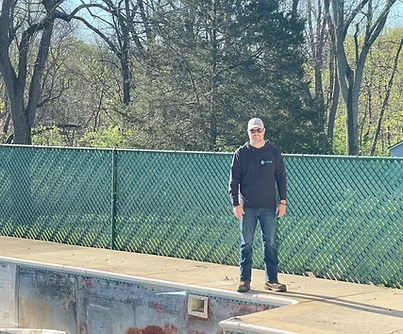
Tim Robinson is the owner of Robinson Landscape LLC, proudly serving Bucks and Montgomery Counties for over 24 years. Known for his strong work ethic, clear communication, and reliability, Tim brings passion and professionalism to every job. When he’s not working, he enjoys time with his wife, two kids, and their family dog.