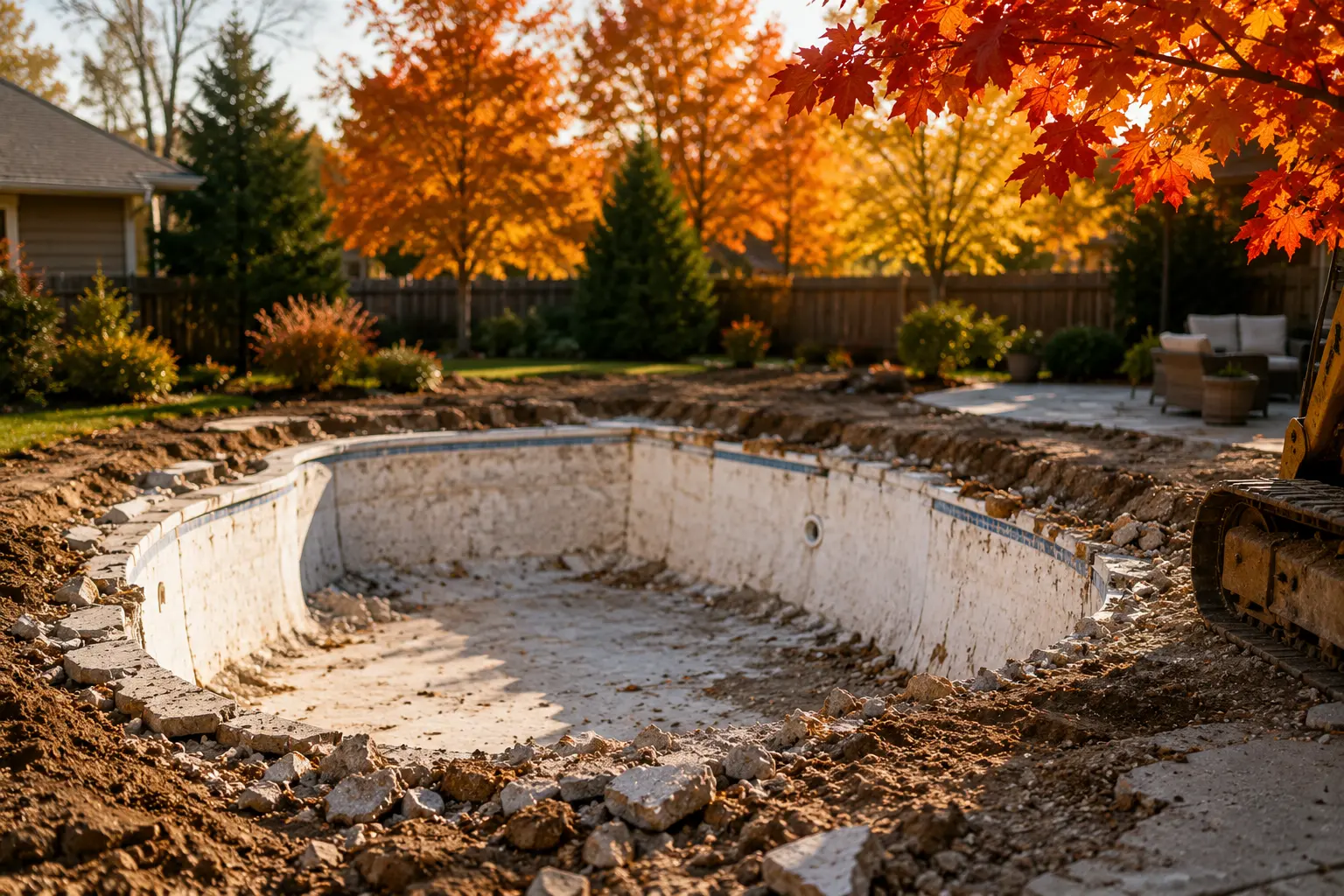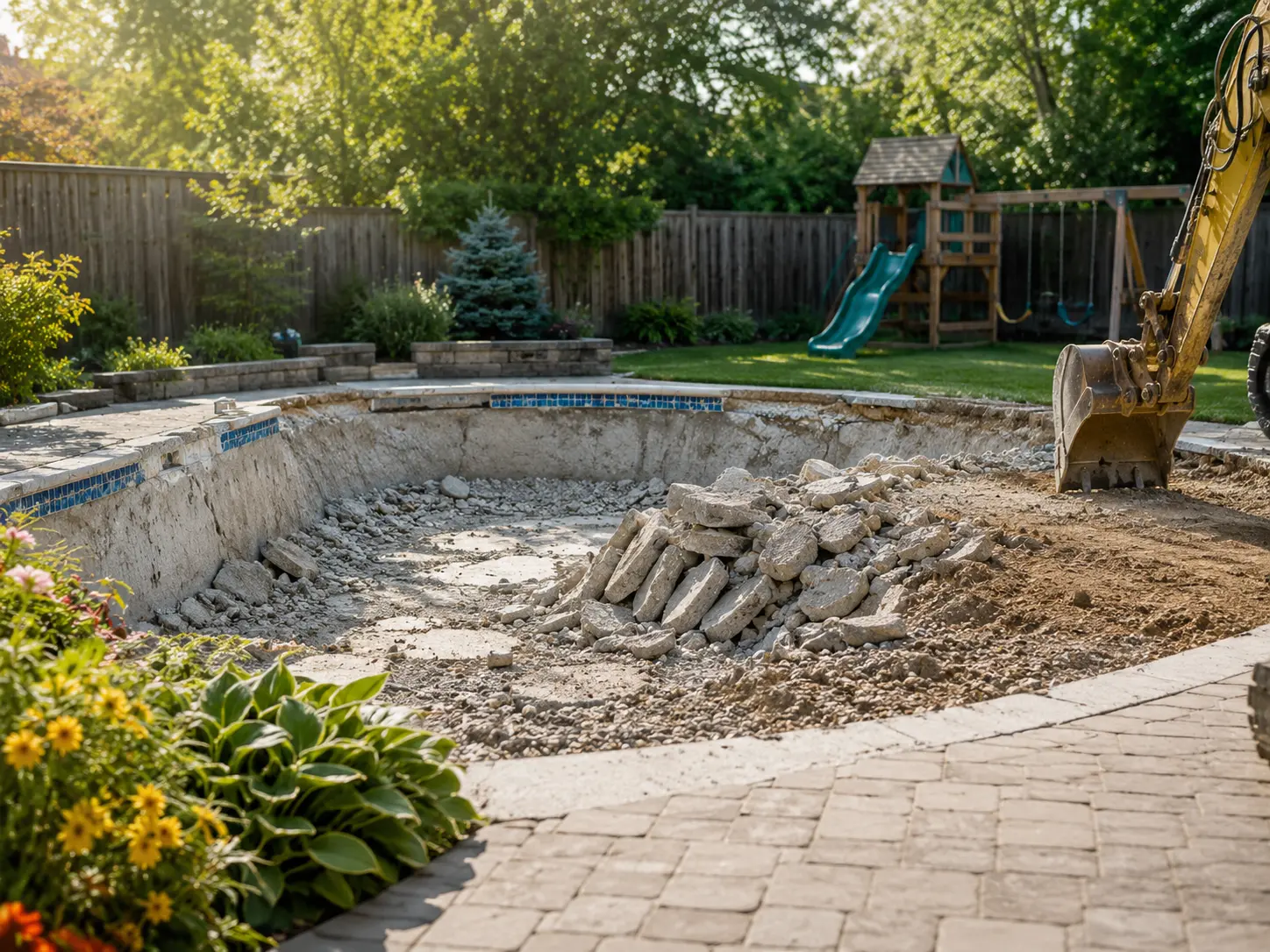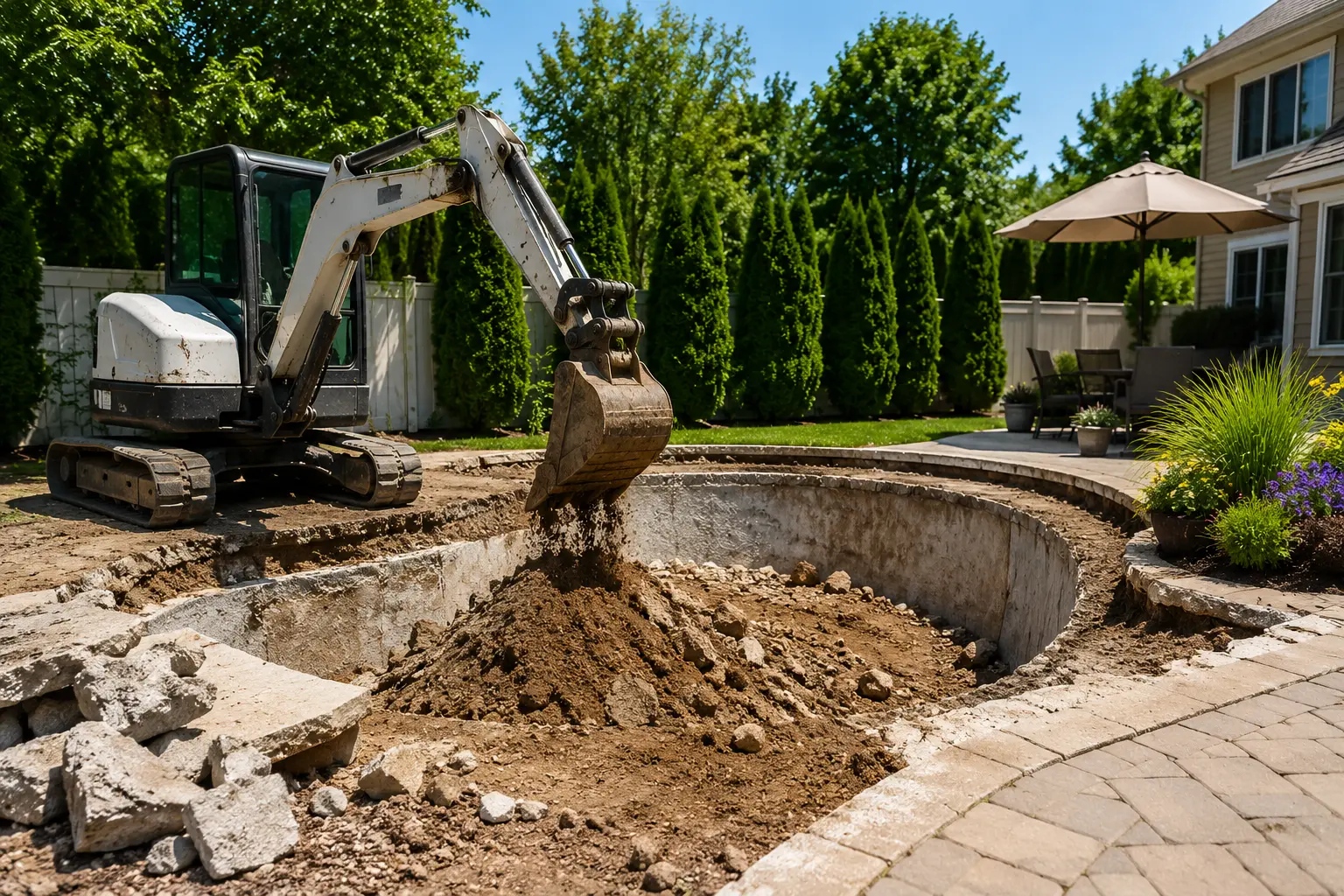
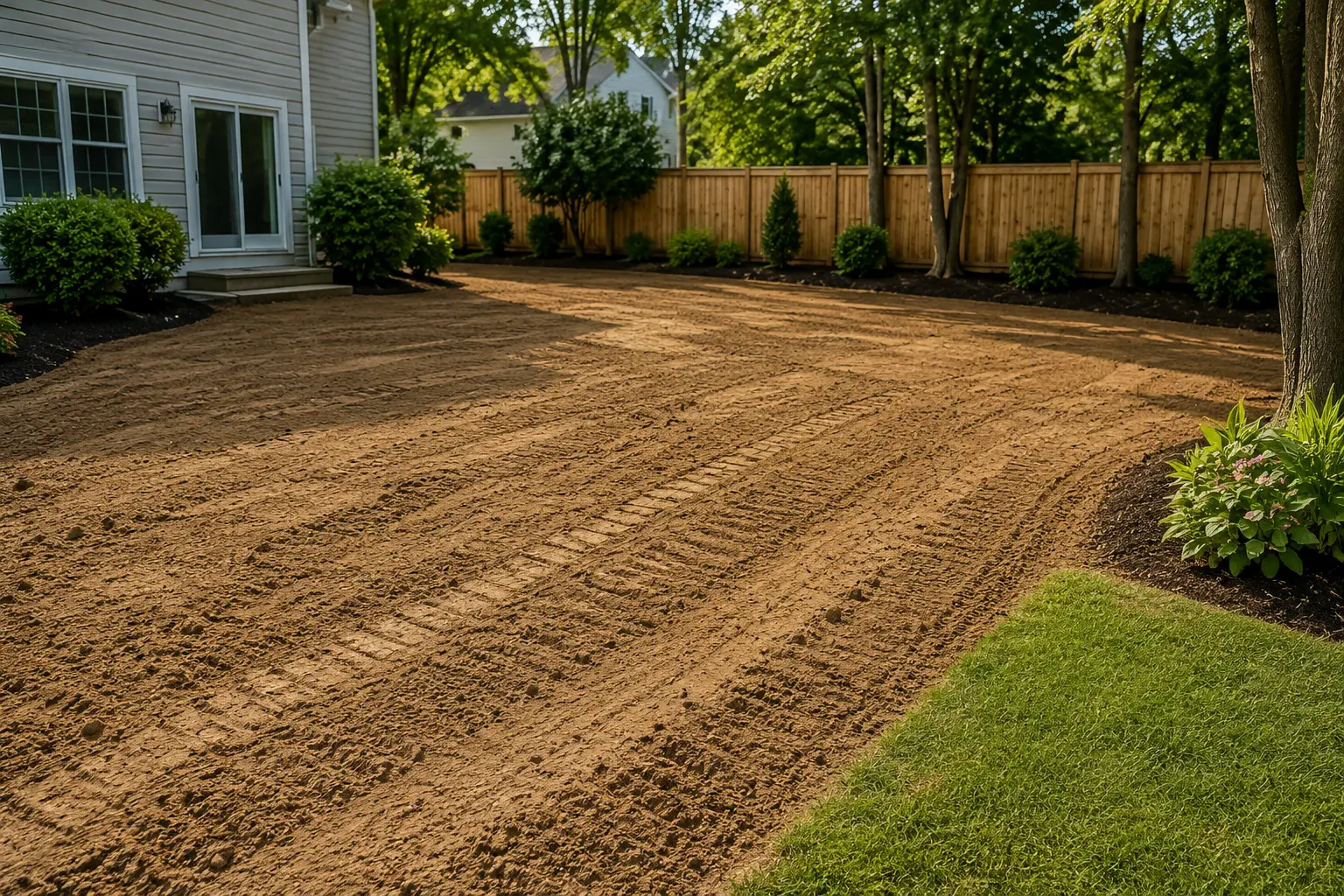
The pool is gone, the yard looks level, and the crew has driven away. Six months later, you notice water pooling in the middle of your yard after every rain — or worse, seeping toward your foundation. This is the hidden consequence of improper grading after pool removal, one of the most expensive mistakes a budget contractor can leave behind. In Southeastern Pennsylvania’s clay-heavy soils, getting the grade right isn’t optional — it’s the difference between a yard that drains for decades and one that creates flooding, settling, and structural problems. After 25+ years of pool removals across Bucks County and Montgomery County, Robinson Landscape knows exactly why proper grading matters.
What You’ll Learn
- What Grading After Pool Removal Actually Means
- Why Improper Grading Causes Expensive Damage
- Warning Signs Your Pool Site Was Graded Poorly
- How Proper Grading Is Done Right
- Why Southeastern PA Homeowners Choose Robinson Landscape
- Frequently Asked Questions
- Next Steps
What Grading After Pool Removal Actually Means
Grading is the process of shaping the ground’s surface so water flows away from your home and doesn’t collect anywhere in your yard. After pool removal, it’s the final and most critical step in site restoration — and the one where shortcuts cause the most damage.
Proper grading after pool removal involves:
- Establishing correct slope. The restored area should slope gently away from your foundation — roughly 2–3 inches of drop for every 10 feet of distance, ensuring water always moves away from the structure.
- Eliminating low spots. The filled pool cavity must be graded so it doesn’t become a depression where water collects, accounting for future settlement.
- Blending with existing topography. The restored area must integrate smoothly with your yard’s natural contours so water flows correctly across the entire property.
- Working with proper fill and compaction. Grading only holds if the underlying fill was compacted correctly. Loose fill settles, reversing even a perfect initial grade.
Grading isn’t dumping soil into the cavity and smoothing the top. It’s precision work that determines how your property manages water for years.
Why Improper Grading Causes Expensive Damage
Water Always Follows Gravity
Water flows along the path of least resistance and collects at low points. If that low point is near your foundation, you have a serious problem developing. In Southeastern Pennsylvania, where annual rainfall exceeds 40 inches, poor grading turns every rainfall into a threat.
Foundation Damage Is the Costliest Consequence
When water pools near your foundation, it creates hydrostatic pressure — standing water pressing against your foundation walls. Over time, this causes cracks, shifts, and leaks. Saturated soil settles unevenly, shifting the structure. What starts as a drainage nuisance becomes a structural problem, and foundation repairs routinely run into five figures — far more than proper grading would have cost.
Clay Soil Makes Southeastern PA Especially Vulnerable
Bucks County and Montgomery County’s clay-heavy soil compounds every drainage problem. Clay drains slowly and holds water, so misdirected water lingers. Clay also expands when wet and contracts when dry, accelerating settling in improperly compacted fill — which is why pool removal here demands local expertise.
Settling Reverses Bad Grading Over Time
Even if a site looks properly graded on completion day, poor compaction beneath the surface guarantees future settling. As improperly compacted fill consolidates, the surface sinks unevenly, creating new low spots months later. A yard that drained fine initially develops pooling problems — which is why professional compaction and grading must work together.
Warning Signs Your Pool Site Was Graded Poorly
If a previous contractor removed your pool — or you’re evaluating a property with a filled-in pool — watch for these red flags:
- Standing water after rain. Puddles persisting for hours or days over the former pool area indicate the site is too low or lacks proper slope.
- Water flowing toward your house. If water drifts toward your foundation rather than away after a storm, the grade is negative — the most dangerous condition.
- A visible depression forming. If the former pool area is sinking below the surrounding grade, the fill was inadequately compacted.
- Soggy or perpetually wet patches. Areas staying muddy long after rain signal water collecting where the grade traps it.
- Damp basement walls or foundation moisture. Early warning signs that water is being directed toward your home.
- Erosion or washout channels. Visible channels where water has carved paths indicate poor water management.
Catching these signs early matters — addressing grade problems in the first year is far cheaper than repairing foundation damage after years of water exposure.
How Proper Grading Is Done Right
It Starts with the Fill
Proper grading is impossible without proper fill and compaction. Robinson Landscape uses certified clean fill installed in layers and systematically compacted to prevent settling — the literal foundation for a grade that lasts. Contractors who dump debris or uncertified fill without layered compaction create sites that settle and undo surface grading within a year or two.
Precision Slope Away from the Home
Once the cavity is properly filled and compacted, we grade the surface to establish a gentle, consistent slope directing water away from your foundation. The goal is a grade that feels level underfoot but is precisely shaped to move water where it should go. We account for the entire property’s topography — not just the pool footprint — so water flows correctly across your whole yard.
Accounting for Future Settlement
Experienced grading anticipates settling. Robinson Landscape recommends waiting 30 days before major landscaping, and our fill and compaction process minimizes the settling that causes future grade problems.
Integrated Drainage When Needed
On properties with heavy clay, low elevation, or challenging topography, grading alone sometimes needs support. Robinson Landscape assesses each site and can incorporate additional drainage solutions where conditions require them.
Why Southeastern PA Homeowners Choose Robinson Landscape
Robinson Landscape has performed pool removal with proper grading throughout Southeastern Pennsylvania since 2000 — now in our 26th year. Our understanding of Bucks County and Montgomery County’s clay soils, drainage patterns, and topography means we get the grade right the first time. We’re triple-licensed (PA #pa071368, NJ #13vh08112100, Philadelphia #46245) with OSHA certification (#36-900440038) and a BuildZoom score of 113 — top 3% of 125,106 Pennsylvania contractors. Tim Robinson personally oversees every project, including the critical final grading.—
Frequently Asked Questions
What slope is correct for grading after pool removal? The industry standard directs water away from your home at roughly 2–3 inches of drop per 10 feet of distance from the foundation. Robinson Landscape grades every site so water flows away and doesn’t pool anywhere in your yard.
Can improper grading after pool removal really damage my foundation? Yes. Water pooling near your foundation creates hydrostatic pressure that causes cracks, leaks, and uneven settling over time. Foundation repairs often cost far more than proper grading would have.
How do I know if my pool site was graded correctly? Watch your yard after rain. Water should flow away from your home with no standing puddles over the former pool area. Depressions, soggy patches, or water moving toward your foundation are warning signs of improper grading.
Why is grading harder in Bucks County’s clay soil? Clay drains slowly, holds water, and expands and contracts with moisture — accelerating settling in poorly compacted fill. Techniques that work in sandy soil often fail in Southeastern Pennsylvania’s clay.
What happens if the fill settles after grading? Poorly compacted fill settles over time, creating new low spots that reverse good initial grading. Robinson Landscape’s systematic compaction minimizes settling, and we recommend waiting 30 days before major landscaping.
Does Robinson Landscape include grading in pool removal? Yes. Every Robinson Landscape pool removal includes certified fill, systematic compaction, precision grading, topsoil, and seeding. Proper grading is a core part of our restoration process — never an afterthought or upcharge.
Can poor grading from a previous contractor be fixed? Often, yes. Regrading a settled or improperly sloped area is possible, though it may require additional fill and compaction. Robinson Landscape can assess a previously removed pool site and recommend corrective grading if needed.
How long does proper grading take during pool removal? Grading is the final phase of our 2–3 day pool removal process. It follows fill and compaction, ensuring the surface directs water correctly before we apply topsoil and seed.
Next Steps
Key takeaways:
- Proper grading directs water away from your foundation — roughly 2–3 inches of drop per 10 feet
- Improper grading causes standing water, settling, and foundation damage costing five figures
- Bucks County’s clay soil makes correct grading and compaction essential
- Robinson Landscape includes precision grading in every pool removal
Don’t let improper grading turn your pool removal into a foundation problem. Contact Robinson Landscape for a free estimate — whether removing a pool or assessing a previously filled site. Call (215) 292-6572 or email tim@robinsonlandscape.com. Serving Bucks County, Montgomery County, Philadelphia, and Central/South New Jersey.
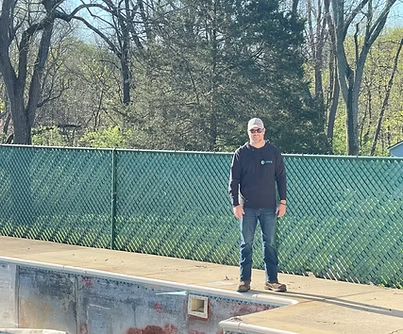
Tim Robinson is the owner of Robinson Landscape LLC, proudly serving Bucks and Montgomery Counties for over 24 years. Known for his strong work ethic, clear communication, and reliability, Tim brings passion and professionalism to every job. When he’s not working, he enjoys time with his wife, two kids, and their family dog.