You’ve decided to remove your pool — but now you’re staring at your township’s website wondering what permits you need, who issues them, and what happens if you skip the process. Pool removal permit requirements in Pennsylvania vary from one municipality to the next, and getting it wrong can mean fines, failed resale inspections, or project shutdowns. After 25+ years handling permits across Bucks County, Montgomery County, Philadelphia, and New Jersey, Robinson Landscape has navigated this process thousands of times. This guide breaks down what you need to know.
What You’ll Learn
- Why Pool Removal Permits Matter More Than You Think
- What Makes Pennsylvania’s Permit System So Confusing
- Township-by-Township Permit Requirements
- How Robinson Landscape Handles the Entire Permit Process
- Why Southeastern PA Homeowners Choose Robinson Landscape
- Frequently Asked Questions
- Next Steps
Why Pool Removal Permits Matter More Than You Think
Most Bucks County and Montgomery County townships require a demolition permit before any pool removal work can begin. This isn’t just bureaucracy — permits exist to protect you, your neighbors, and your property’s future value.
Here’s what’s at stake when permits are skipped or mishandled:
- Fines and stop-work orders. Township code enforcement officers actively monitor for unpermitted demolition. Penalties can reach $500–$5,000 or more, with daily fines accumulating until compliance is achieved.
- Problems when selling your home. Unpermitted pool removal must be disclosed during a property sale. Buyers’ inspectors and title companies flag these issues, potentially derailing closings or forcing costly remediation.
- Liability exposure. Without proper permits and inspections, you assume full liability for drainage issues, settling, or damage to neighboring properties.
- Utility strikes. Permits trigger PA One Call (811) utility marking requirements, preventing accidental damage to underground gas, electric, water, and sewer lines during excavation.
What Makes Pennsylvania’s Permit System So Confusing
No Statewide Standard for Pool Demolition Permits
Pennsylvania operates under the Uniform Construction Code (PA UCC), but each township enforces its own local ordinances on top of the state framework. Pool removal in Doylestown Township follows a different process than in Warminster or Bensalem — even though they’re all in Bucks County.
In our 25+ years serving Southeastern Pennsylvania, we’ve seen requirements range from a simple one-page zoning application to multi-step processes requiring surveys, grading plans, utility disconnection letters, and fire prevention plans.
Multiple Permit Types May Be Required
Depending on your location, pool removal may require a demolition permit (the primary permit in most townships), a zoning permit, a grading/earth disturbance permit for changes to drainage patterns, and separate trade permits for electrical and plumbing disconnection. Many homeowners don’t realize they need more than one.
Philadelphia and New Jersey Add Complexity
Philadelphia’s process operates through the Department of Licenses and Inspections (L&I) — entirely separate from suburban townships. It requires a licensed demolition contractor, a posted Notice of Demolition, and a 21-day waiting period before work begins. Standard processing takes 20 business days.
New Jersey municipalities require Construction Permits with property surveys, zoning review, and compliance with NJ DEP solid waste regulations. Some townships mandate demolished concrete be broken to 3–4 inch pieces maximum. Robinson Landscape holds licenses for both jurisdictions.
Township-by-Township Permit Requirements
Requirements change and fees are updated periodically — always verify with your local building department, or let Robinson Landscape handle it. Here’s what we’ve encountered across our primary service areas.
Bucks County Townships
Doylestown Township — Building/demolition permit through Code and Zoning. Contractor registration required. Contact: (215) 348-9915.
Newtown Township — Demolition permit through Code Enforcement. Contractor registration required. Historic District properties need additional Joint Historic Commission review. Contact: (215) 968-2800.
Bensalem Township — Demolition permit with utility shutoff letters from PECO and water/sewer authority required at submission. Contact: (215) 633-3700.
Warminster Township — Building permit for demolition. Earth disturbance permits may apply for grading changes. Contact: (215) 443-5428.
Lower Southampton Township — UCC permit form for demolition plus separate zoning permit. Contact: (215) 357-7300.
Warwick Township — Grading permits required for all earth disturbance or drainage changes, plus building permits. Contact: (215) 343-9350.
Northampton, Buckingham, Bedminster — Demolition permits through respective code enforcement offices. Processing times and fees vary.
Montgomery County Townships
Montgomery Township — Specific demolition permit form for buildings and in-ground pools.
Abington Township — Demolition permit plus NFPA 241 Fire Prevention Plan required.
Horsham, Lower Moreland, Upper Dublin — Standard demolition permits with contractor licensing and insurance documentation.
Philadelphia
Complete Demolition Permit from L&I required. Philadelphia-licensed contractor mandatory. Posted Notice of Demolition with 21-day wait period. Robinson Landscape holds Philadelphia License #46245. Contact L&I: (215) 686-8686.
Central & South New Jersey
Mount Laurel, Hamilton, Hopewell, Cherry Hill — Construction Permits required with property surveys, zoning review, and NJ DEP compliance. Robinson Landscape holds NJ License #13vh08112100.
For all locations: PA One Call (811) must be contacted before any excavation to mark underground utilities. This is a legal requirement.
How Robinson Landscape Handles the Entire Permit Process
After thousands of pool removal projects across dozens of municipalities since 2000, Robinson Landscape maintains current knowledge of permit requirements in every township we serve. We know which need grading permits, which require fire prevention plans, and which have contractor registration requirements.
Our process covers everything: completing all required forms and documentation, submitting applications to the correct departments, informing you of exact permit fees (typically $50–$500) upfront, coordinating with processing timelines that range from same-week approval to 20+ business days in Philadelphia, scheduling all required inspections at key stages, and delivering complete documentation at project completion for your records and future property sales.
Why Southeastern PA Homeowners Choose Robinson Landscape
Robinson Landscape has handled pool removal permits across Southeastern Pennsylvania since 2000 — now in our 26th year. We’re triple-licensed (PA #pa071368, NJ #13vh08112100, Philadelphia #46245) with OSHA certification (#36-900440038). Our BuildZoom score of 113 places us in the top 3% of 125,106 Pennsylvania contractors.
Tim Robinson personally oversees every project, and our team handles everything from permit application through final inspection. Most pool removals are completed in 2–3 days with full site restoration and transparent pricing.
Frequently Asked Questions
Do I need a permit to remove a pool in Pennsylvania? In most Bucks County and Montgomery County townships, yes. The majority of municipalities require a demolition permit before pool removal work can begin. Requirements vary by township, which is why Robinson Landscape verifies and handles permits for every project.
How much do pool removal permits cost in Southeastern PA? Permit fees typically range from $50–$500 depending on your municipality and the scope of work. Some townships charge flat fees while others calculate costs based on project value or square footage. Robinson Landscape includes permit costs in your detailed estimate.
How long does it take to get a pool removal permit approved? Processing times vary significantly. Some Bucks County townships approve permits within a week, while Philadelphia’s standard processing is 20 business days. Robinson Landscape factors permit timelines into every project schedule.
What happens if I remove my pool without a permit? Unpermitted demolition can result in fines of $500–$5,000+, stop-work orders, and mandatory remediation. It also creates disclosure problems when selling your property. Buyers’ title searches and inspections routinely flag unpermitted work.
Does Robinson Landscape handle all the permits for me? Yes. We manage the entire permit process — applications, fees, inspections, and final documentation — across every township we serve in Bucks County, Montgomery County, Philadelphia, and New Jersey.
Do I need a separate permit for electrical and plumbing disconnection? In many townships, yes. Pool removal involves disconnecting electrical systems, gas lines, and plumbing, which may require separate trade permits. Robinson Landscape coordinates all required permits as part of our complete service.
Are permit requirements different in New Jersey? Yes. New Jersey municipalities require Construction Permits issued under DCA regulations, with requirements for property surveys, zoning review, and specific backfill standards. Robinson Landscape holds NJ License #13vh08112100 and understands requirements across Central and South New Jersey.
What documentation should I keep after pool removal? Keep all permit approvals, inspection records, and completion certificates. These documents are essential for future property sales — they prove the pool was removed legally and to code. Robinson Landscape provides all documentation at project completion.
Next Steps
Key takeaways:
- Most PA townships require demolition permits for pool removal — requirements vary by municipality
- Philadelphia and New Jersey have separate, more complex permitting systems
- Unpermitted work risks fines, stop-work orders, and problems when selling
- Robinson Landscape handles all permits, inspections, and documentation
Don’t let permit confusion delay your pool removal. Contact Robinson Landscape for a free estimate — we’ll identify exactly what your township requires and handle every step. Call (215) 292-6572 or email tim@robinsonlandscape.com to speak with Tim Robinson. Serving Bucks County, Montgomery County, Philadelphia, and Central/South New Jersey.
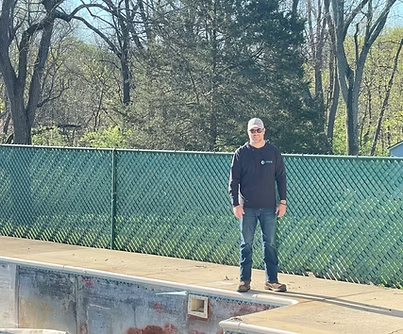
Tim Robinson is the owner of Robinson Landscape LLC, proudly serving Bucks and Montgomery Counties for over 24 years. Known for his strong work ethic, clear communication, and reliability, Tim brings passion and professionalism to every job. When he’s not working, he enjoys time with his wife, two kids, and their family dog.