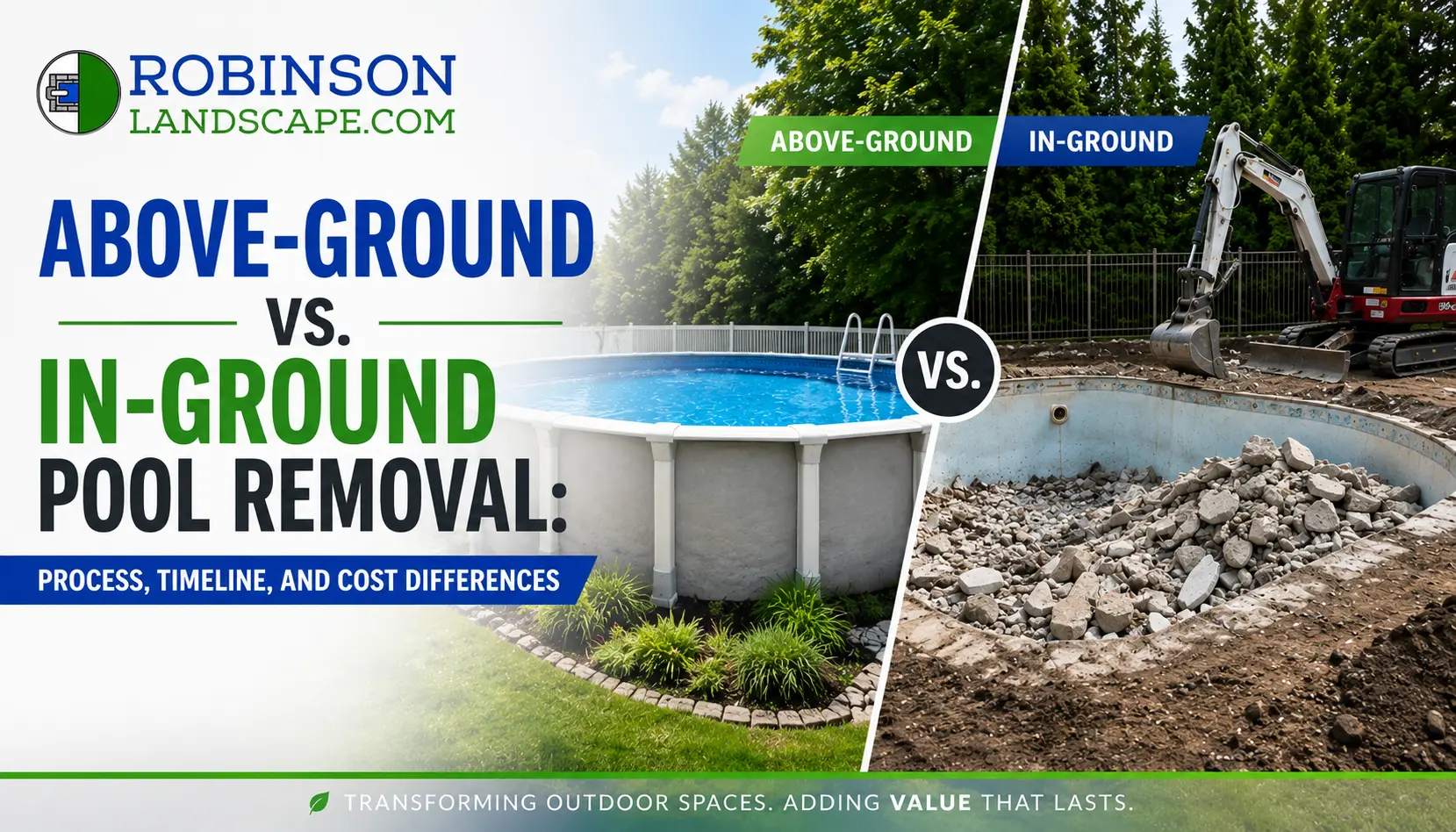
You know you want the pool gone, but the removal process isn’t one-size-fits-all. Whether you have an above-ground structure with a wraparound deck or a 40-year-old concrete inground pool, the equipment, timeline, permits, and cost differ significantly. In Southeastern Pennsylvania, where both pool types are common across Bucks County and Montgomery County properties, understanding these differences helps you budget accurately and choose the right contractor. After 25+ years removing both types throughout the region, Robinson Landscape breaks down what each process involves.
What You’ll Learn
- Why the Removal Process Differs So Significantly
- What Drives the Differences in Cost, Time, and Complexity
- Side-by-Side Comparison: Process, Timeline, and Cost
- Choosing the Right Approach for Your Property
- Why Southeastern PA Homeowners Choose Robinson Landscape
- Frequently Asked Questions
- Next Steps
Why the Removal Process Differs So Significantly
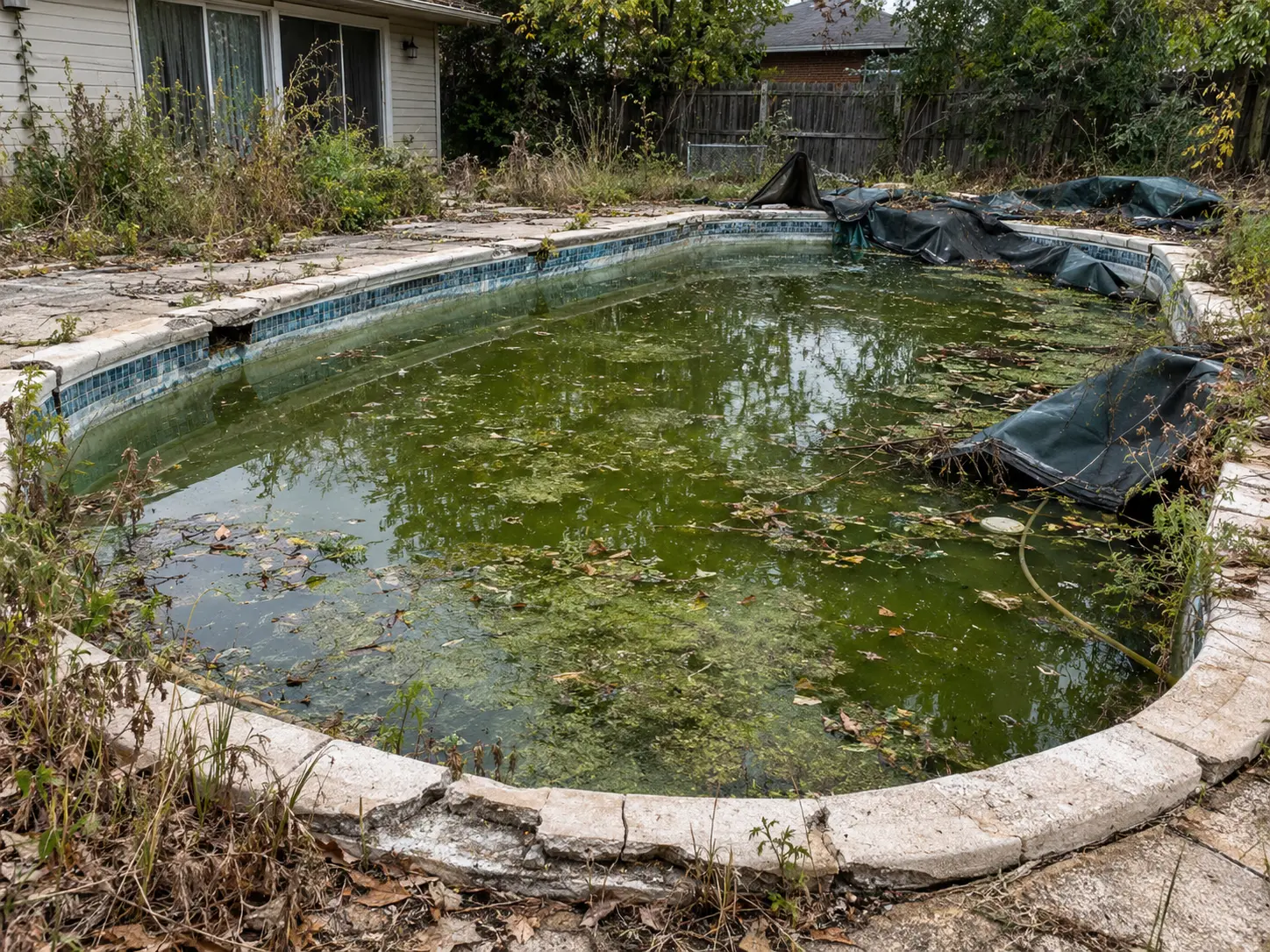
The fundamental difference comes down to what’s in the ground. Above-ground pools sit on the surface — their walls, liner, and frame are accessible from day one. Removal is essentially disassembly and hauling. Inground pools are embedded 5–8 feet into the earth with concrete, steel rebar, plumbing, and electrical systems that must be demolished, extracted, and replaced with engineered fill.
That distinction creates differences homeowners need to understand:
- Equipment. Above-ground removal uses hand tools and a truck. Inground requires excavators, jackhammers, and heavy machinery.
- Permits. Many Pennsylvania townships require demolition permits for inground removal. Above-ground requirements vary by municipality.
- Site restoration. After above-ground removal, you’re regrading a surface-level area. After inground removal, you’re filling and compacting a cavity the size of a small room.
- Professional expertise. Above-ground removal can sometimes be DIY. Inground removal is not — improper fill creates settling and drainage problems for years.
What Drives the Differences in Cost, Time, and Complexity
Structural Complexity
Above-ground pools are designed for disassembly. Steel or aluminum frames unbolt, vinyl liners pull out, and components load onto a truck. The most complex element is usually a surrounding deck requiring its own demolition.
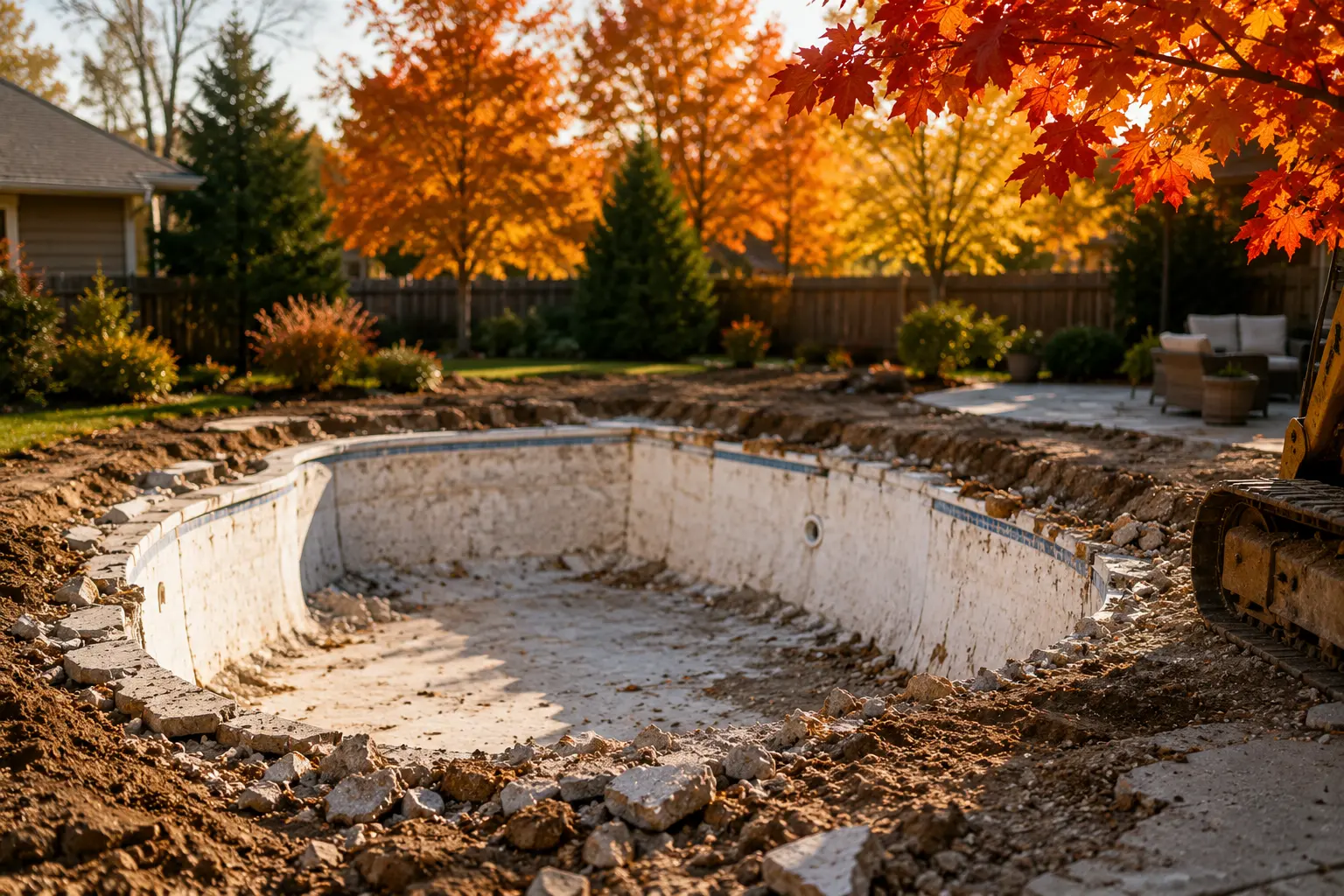
Inground pools are permanent structures. Concrete and gunite shells require jackhammering into pieces. Steel rebar must be cut and extracted. Fiberglass shells may come out whole but need crane access. All plumbing and electrical running underground must be disconnected and capped. In our experience across Southeastern Pennsylvania, the construction type — vinyl, concrete, or fiberglass — significantly affects both timeline and cost.
Backfill and Compaction
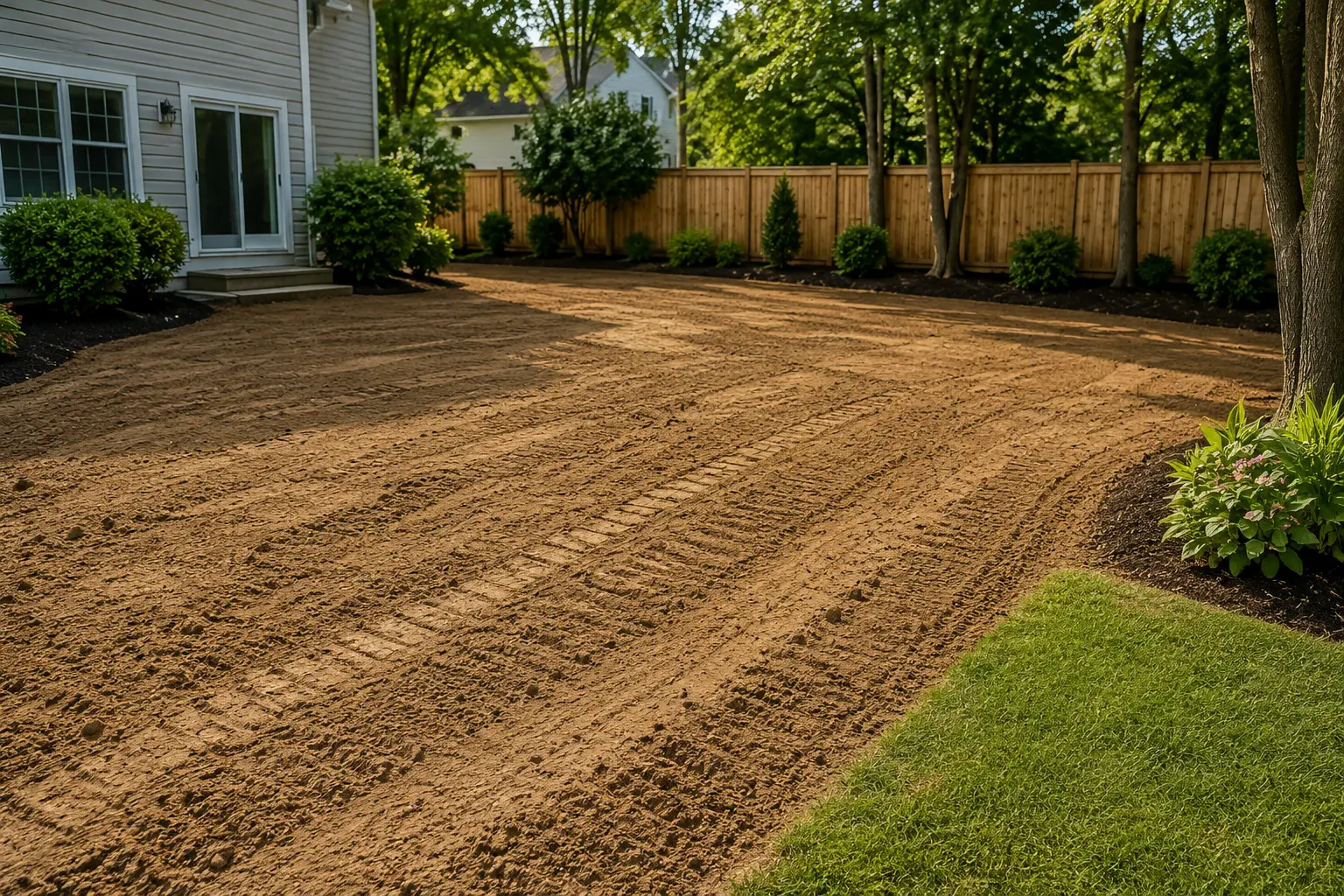
This is where the real cost difference emerges. Above-ground removal leaves a surface-level depression — typically the sand base the pool sat on. Regrading and seeding usually completes restoration.
Inground removal leaves a 5–8 foot cavity that must be filled with certified clean material and compacted in layers. In Bucks County’s clay-heavy soils, this step is critical. Robinson Landscape uses certified fill meeting county specifications with systematic compaction — because shortcuts create sinkholes and drainage failures that surface months later.
Permits and Regulations
Most Bucks County and Montgomery County townships require demolition permits for inground removal, with separate permits sometimes needed for electrical and plumbing disconnection. Philadelphia requires a licensed contractor and 21-day posting period. Above-ground permits vary more widely by township. Either way, PA One Call (811) is legally required before excavation.
Side-by-Side Comparison: Process, Timeline, and Cost
Above-Ground Pool Removal
Process: Drain the pool, disconnect electrical and plumbing, disassemble frame and walls, remove liner, demolish surrounding deck, haul materials, regrade surface, add topsoil and seed. Robinson Landscape recycles metal components whenever possible.
Timeline: Most completed in a single day. Large pools with extensive decking may take 1–2 days.
Cost: $3,000–$6,000. Variables include pool size, deck complexity, access conditions, and disposal requirements.
In-Ground Pool Removal
Process: Obtain permits, contact PA One Call, drain pool, disconnect all utilities, demolish pool shell with excavators and jackhammers, remove debris and rebar, fill with certified clean material in compacted layers, grade for drainage, install topsoil, and seed.
Cost: $5,000–$25,000. Variables include pool size, construction type (vinyl costs less to demolish than concrete or gunite), access conditions, permit fees, and restoration complexity.
Timeline: 2–3 days with Robinson Landscape — well ahead of the industry standard 5–7 days. Emergency removals completed in as little as 4 days for real estate transactions.
Partial vs. Full Inground Removal
One distinction that doesn’t apply to above-ground pools: inground pools can be partially or fully removed. Partial removal breaks the top 2–3 feet of the shell, punches drainage holes in the bottom, and fills over the remaining structure. It costs less but limits future use — you cannot build structures on the site, and it must be disclosed when selling. Full removal extracts everything for unrestricted use.
Choosing the Right Approach for Your Property
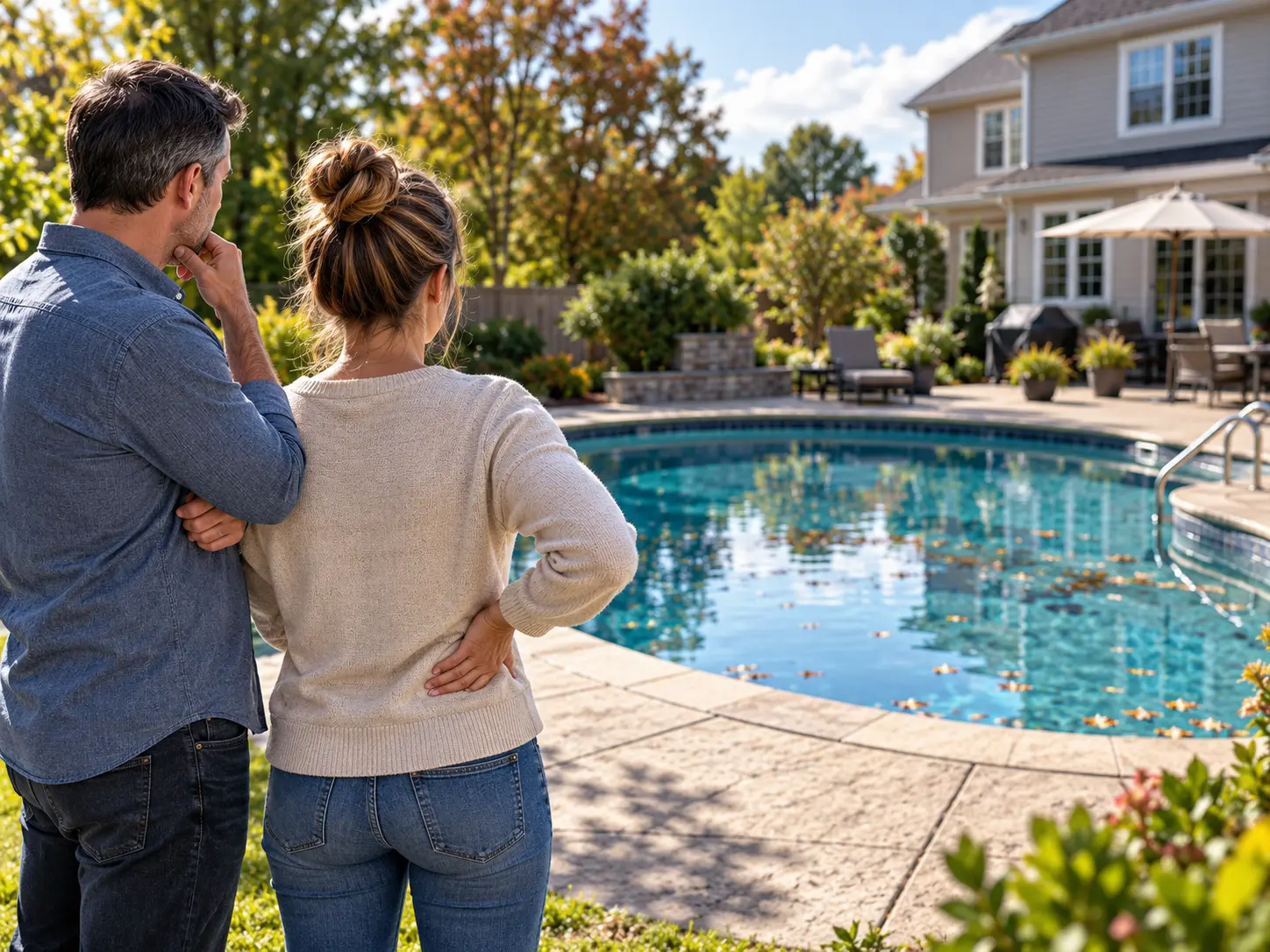
What are your future plans? If you want to build a patio, pergola, or any structure, full inground removal is necessary. Above-ground sites and fully removed inground sites have no restrictions.
Are you selling? Full removal is almost always better before a sale. Partial removals require disclosure and complicate transactions.
What’s your budget? Above-ground removal at $3,000–$6,000 is significantly less than inground at $5,000–$25,000. But both should be weighed against $2,000–$5,000+ in eliminated annual maintenance costs.
Even above-ground removal benefits from professional handling. Electrical disconnection requires licensed work in most municipalities, deck demolition involves heavy materials, and improper regrading creates drainage problems affecting your foundation. For inground removal, professional expertise isn’t optional — improper compaction in Southeastern PA’s clay soils leads to settling that takes years to manifest.
Why Southeastern PA Homeowners Choose Robinson Landscape {#why-us}
Robinson Landscape removes both above-ground and inground pools throughout Southeastern Pennsylvania — now in our 26th year since 2000. We’re triple-licensed (PA #pa071368, NJ #13vh08112100, Philadelphia #46245) with OSHA certification (#36-900440038) and a BuildZoom score of 113 — top 3% of 125,106 Pennsylvania contractors. Tim Robinson personally oversees every project with transparent pricing and no hidden fees.
Frequently Asked Questions
Is above-ground pool removal cheaper than inground? Yes. Above-ground removal costs $3,000–$6,000 compared to $5,000–$25,000 for inground. The difference reflects excavation, demolition, fill, compaction, and permitting that inground removal requires.
Can I remove an above-ground pool myself? Small pools without decks can be DIY projects. However, electrical disconnection typically requires licensed work, and disposal must comply with local regulations. Professional removal ensures proper handling.
How long does each type take? Above-ground pools typically take one day. Inground pools take 2–3 days with Robinson Landscape. Large decks, difficult access, or complex sites may extend either timeline.
Do both types require permits in Pennsylvania? Most Bucks County and Montgomery County townships require demolition permits for inground removal. Above-ground requirements vary by municipality. Robinson Landscape verifies and handles all permits.
What’s the difference between partial and full inground removal? Partial removal breaks the top portion, fills over the rest — cheaper but limits future use and requires seller disclosure. Full removal extracts everything for unrestricted use. This distinction applies only to inground pools.
Which type is harder to remove? Inground pools are substantially more complex. Concrete and gunite require heavy demolition, and the cavity must be filled with certified material and systematically compacted. Above-ground is primarily disassembly and hauling.
Does pool type affect yard recovery time? Above-ground sites recover faster since restoration is surface-level. Inground sites need 6–12 months for full grass establishment due to deeper fill and settlement.
Should I remove my above-ground pool before selling? If it’s aging or unused, removal often helps. The lower cost ($3,000–$6,000) makes it an accessible pre-sale investment that expands your buyer pool.
Next Steps
Key takeaways:
- Above-ground: $3,000–$6,000, typically one day, primarily disassembly
- Inground: $5,000–$25,000, typically 2–3 days, requires demolition, fill, and compaction
- Both eliminate $2,000–$5,000+ in annual maintenance costs permanently
- Full inground removal gives unrestricted future use; partial has limitations
Whether you have an above-ground or inground pool, Robinson Landscape provides free, detailed estimates with transparent pricing. Call (215) 292-6572 or email tim@robinsonlandscape.com to speak with Tim Robinson. Serving Bucks County, Montgomery County, Philadelphia, and Central/South New Jersey.
About the Author
Tim Robinson is the Owner and Founder of Robinson Landscape, LLC, with 25+ years removing both above-ground and inground pools across Southeastern Pennsylvania and New Jersey. Tim personally oversees every project and has completed thousands of successful removals since 2000. Robinson Landscape holds a BuildZoom score in the top 3% of Pennsylvania contractors.
Tim Robinson is the owner of Robinson Landscape LLC, proudly serving Bucks and Montgomery Counties for over 24 years. Known for his strong work ethic, clear communication, and reliability, Tim brings passion and professionalism to every job. When he’s not working, he enjoys time with his wife, two kids, and their family dog.