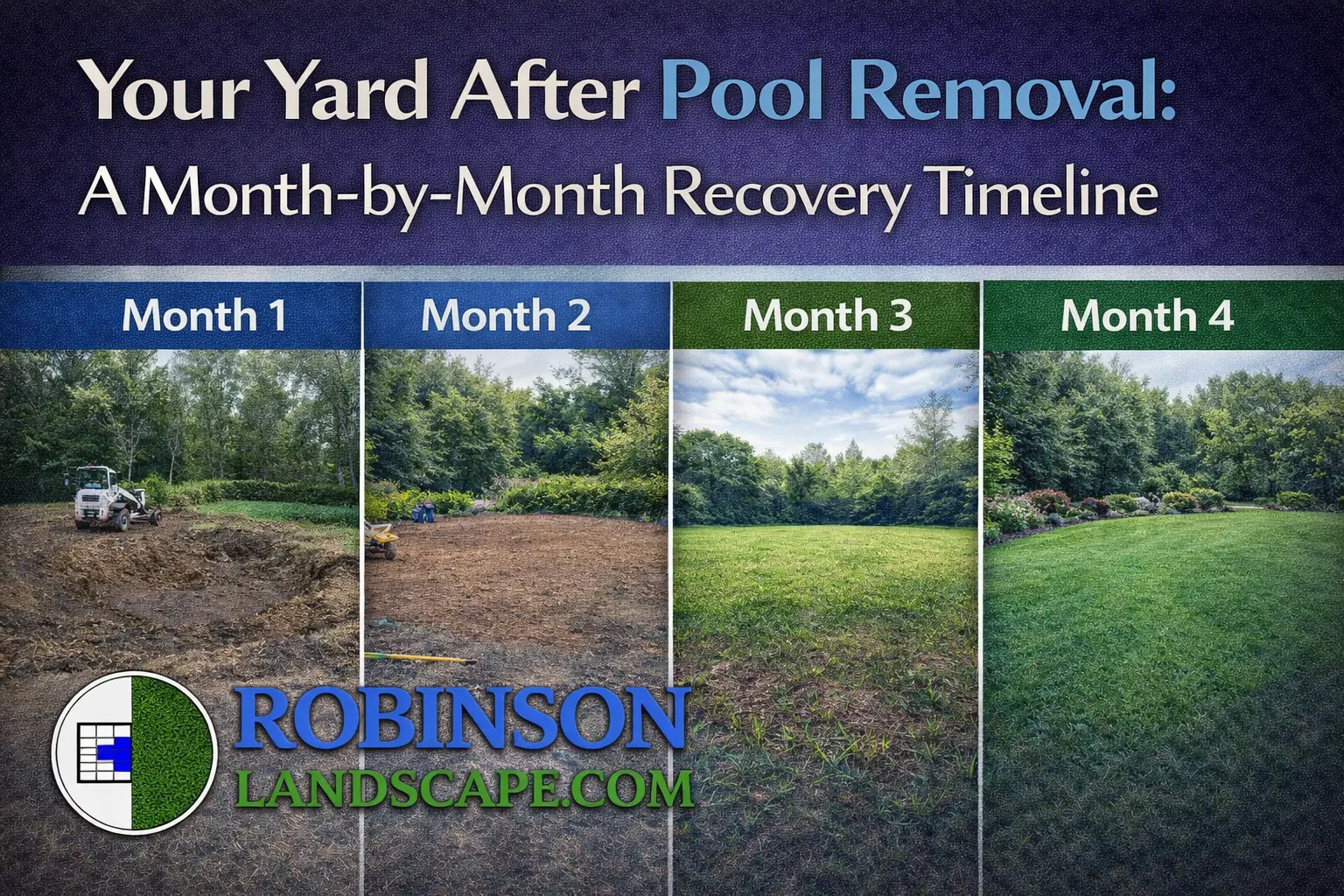
Your pool is gone, the crew has packed up, and you’re looking at a flat expanse of fresh topsoil where a concrete shell used to be. The most common question Bucks County and Montgomery County homeowners ask is how long it takes for their yard after pool removal to look normal again. After thousands of pool removal projects across Southeastern Pennsylvania since 2000, Robinson Landscape has watched this recovery unfold across every season. Here’s the realistic, month-by-month timeline so you know exactly what to expect.
What You’ll Learn
- What Yard Recovery After Pool Removal Actually Involves
- Why the Recovery Process Takes Time (And What Affects It)
- Your Month-by-Month Recovery Timeline
- How to Help Your Yard Recover Faster
- Why Southeastern PA Homeowners Choose Robinson Landscape
- Frequently Asked Questions
- Next Steps
What Yard Recovery After Pool Removal Actually Involves
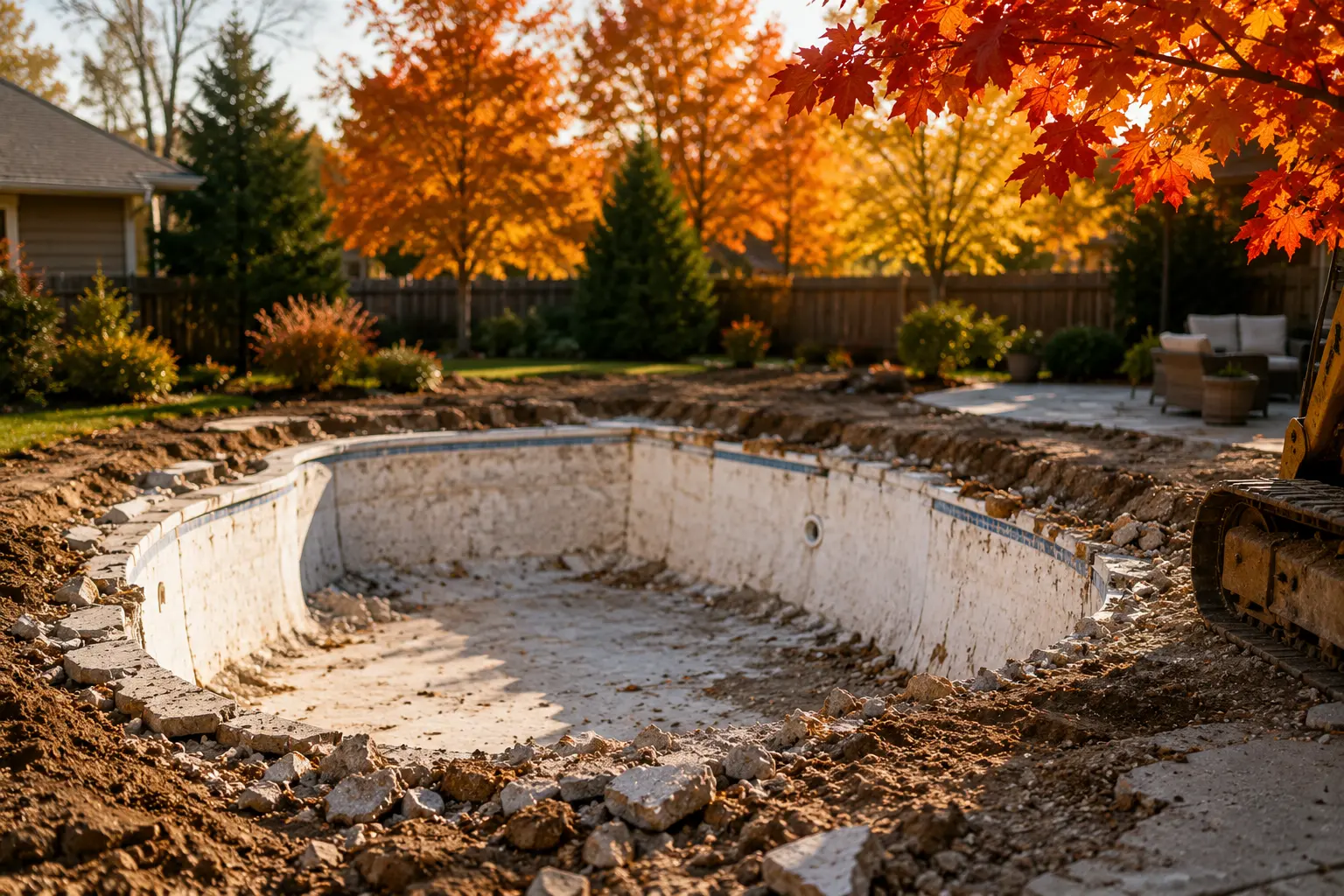
Professional pool removal doesn’t leave you with a hole in the ground. Robinson Landscape fills the excavation with certified clean fill, compacts it in layers, grades for proper drainage, installs topsoil, and seeds the area. But even with professional restoration, your yard after pool removal goes through a natural recovery process.
Here’s what’s happening beneath the surface:
- Fill material is settling. Even with proper compaction, soil consolidates gradually. Minor settling of 1–2 inches is normal during the first several months.
- Grass seed is germinating. Cool-season grasses common in Southeastern Pennsylvania take 7–21 days to germinate and months to fully establish root systems.
- Soil chemistry is stabilizing. The area around a former pool may have altered pH from years of chemical splash-out. Fresh topsoil needs time to integrate.
- Drainage patterns are adjusting. The restored area needs time to develop the organic matter and root structure that support long-term drainage.
Why the Recovery Process Takes Time (And What Affects It)
Clay Soil Creates Unique Challenges
Bucks County and Montgomery County sit on clay-heavy soil that compacts densely but drains slowly. This means fill material in your former pool area interacts with native soil in ways that require patience. In our 25+ years of experience, we’ve learned that clay conditions extend settling timelines slightly — but proper compaction techniques minimize this significantly.
Season of Removal Matters
When your pool was removed directly affects recovery speed. Spring and early fall removals align with Pennsylvania’s optimal grass-growing windows (soil temperatures 50°F–65°F). Summer removals face heat stress on seedlings, while winter removals delay visible growth until spring — though soil settlement happens year-round.
Quality of Fill and Compaction Is Everything
The biggest factor in yard after pool removal recovery is how well the fill was done. Shortcuts — debris as fill, skipped compaction layers, uncertified material — create sinkholes and dead patches months later. Robinson Landscape uses certified clean fill with systematic compaction because it produces reliable long-term results in Southeastern PA’s demanding soils.
Your Month-by-Month Recovery Timeline
Here’s what your yard after pool removal looks like at each stage. This timeline assumes a spring removal in Southeastern Pennsylvania with professional restoration by Robinson Landscape. Adjust expectations by 4–6 weeks for summer or winter removals.
Month 1: Settlement and Germination
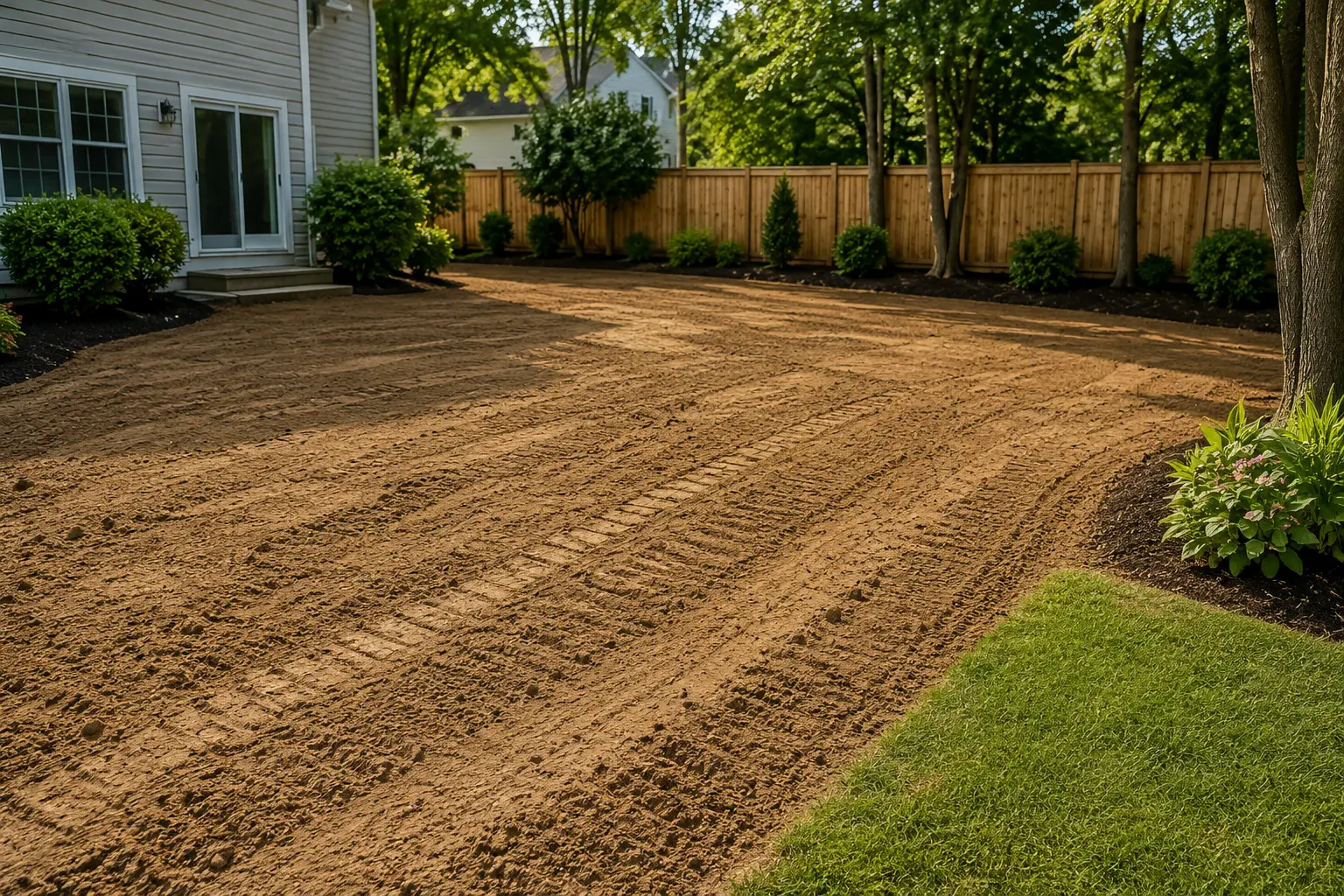
Your yard will look like bare dirt with straw cover — and that’s expected. The fill undergoes its most active settlement during the first 30 days. No foot traffic, heavy objects, or landscaping during this window. If seeded during a favorable season, thin green sprouts emerge around days 10–21. Water lightly and frequently to keep the top inch of soil moist.
Month 2: Early Growth
Grass seedlings reach 2–3 inches, though growth will be uneven — different seed varieties germinate at different speeds. You may notice small depressions of 1–2 inches as fill continues consolidating. These are normal and can be addressed with topsoil once initial growth fills in.
Month 3: Filling In
The area is visibly greening up but still distinguishable from established lawn. Grass becomes mowable — set your mower to 3 inches or higher to encourage root development. Begin light fertilization with a balanced formula.
Months 4–6: Blending
The restored area develops density and starts blending with surrounding yard. Remaining low spots can be addressed with thin topsoil and overseeding. The area handles normal foot traffic, though heavy equipment should still wait.
Months 6–12: Full Establishment
Root systems mature, the grass survives its first seasonal transition, and the restored area becomes visually indistinguishable from the rest of your lawn. Drainage patterns are established, and the area is ready for patios, garden beds, or play equipment.
Year 2 and Beyond
The second growing season is when homeowners tell us they forget where the pool was. Organic matter has built up, roots are fully mature, and the area performs identically to the rest of the yard.
How to Help Your Yard Recover Faster
What You Can Do
Water consistently. New grass needs the top inch of soil kept moist — typically two light waterings daily until established, then deeper, less frequent watering (1 inch per week).
Don’t mow too soon or too short. Wait until grass reaches 3–4 inches, and never remove more than one-third of the blade at once.
Avoid heavy traffic for 30 days. Keep kids, pets, and equipment off the restored area during the critical settlement window.
Address low spots promptly. Add thin layers of topsoil (no more than half an inch at a time) to depressions and overseed. Don’t bury existing grass.
When to Call Robinson Landscape
If you notice settling deeper than 2 inches, persistent standing water, or areas where grass refuses to establish after two growing seasons, contact us. These could indicate issues needing professional assessment. Robinson Landscape stands behind our yard after pool removal restoration work.
Why Southeastern PA Homeowners Choose Robinson Landscape
Robinson Landscape has been Southeastern Pennsylvania’s trusted pool removal specialist since 2000 — now in our 26th year. Our certified clean fill, systematic compaction process, and professional grading are specifically designed to minimize settling and maximize recovery speed in Bucks County and Montgomery County’s clay-heavy soils.
We’re triple-licensed (PA #pa071368, NJ #13vh08112100, Philadelphia #46245) with OSHA certification (#36-900440038) and a BuildZoom score of 113 — top 3% of 125,106 Pennsylvania contractors. Tim Robinson personally oversees every project, and most pool removals are completed in 2–3 days with full site restoration included.
Frequently Asked Questions
How long does it take for grass to grow after pool removal? Seedlings typically emerge within 7–21 days during favorable seasons. Full establishment — where the restored area blends with your existing lawn — takes 6–12 months in Southeastern Pennsylvania’s climate.
Will my yard settle after pool removal? Minor settling of 1–2 inches is normal during the first few months, even with proper compaction. Robinson Landscape uses certified clean fill with systematic compaction to minimize this. Settling beyond 2 inches may indicate a compaction issue worth evaluating.
When is the best time to remove a pool for fastest yard recovery? Early fall (August–September) aligns with Pennsylvania’s optimal cool-season grass window. Spring (March–May) is second-best. Winter removal works too — soil settles through winter and is ready for spring seeding.
Can I plant a garden or build a patio where my pool was? Yes, but wait 6–12 months before installing hardscaping to allow full settlement. Gardens can begin sooner. With a complete pool removal, there are no restrictions on future use of the space.
What grass seed works best after pool removal in Pennsylvania? Robinson Landscape seeds with a blend of Kentucky bluegrass, perennial ryegrass, and tall fescue — providing quick germination, density, and drought tolerance suited to Southeastern PA’s climate.
How much should I water new grass after pool removal? Keep the top inch of soil moist during germination — two light waterings daily for 2–3 weeks. Then transition to deeper watering (about 1 inch per week) to encourage deep root growth.
What if grass won’t grow where my pool was? If grass isn’t establishing after proper watering and two growing seasons, test the soil pH. Years of chlorinated water can alter soil chemistry. A soil test identifies needed amendments. Contact Robinson Landscape for an assessment.
Does Robinson Landscape handle seeding and restoration? Yes. Every pool removal includes full site restoration — grading, certified fill, topsoil, and seeding. You don’t need a separate landscaper for basic restoration.
Next Steps
Understanding what your yard after pool removal will look like — month by month — helps set realistic expectations. Key takeaways:
- Expect 7–21 days for initial emergence, 6–12 months for full establishment
- Minor settling of 1–2 inches is normal; avoid foot traffic for 30 days
- Early fall and spring removals produce fastest recovery in Pennsylvania
- Robinson Landscape’s certified fill process is designed for Bucks County’s clay soils
Ready to reclaim your backyard? Call (215) 292-6572 or email tim@robinsonlandscape.com for a free, no-obligation estimate. We handle everything from permits to final seeding across Bucks County, Montgomery County, Philadelphia, and Central/South New Jersey.
Tim Robinson is the owner of Robinson Landscape LLC, proudly serving Bucks and Montgomery Counties for over 24 years. Known for his strong work ethic, clear communication, and reliability, Tim brings passion and professionalism to every job. When he’s not working, he enjoys time with his wife, two kids, and their family dog.